Creuto is now an OpenAI Select Partner Read More

Healthcare · Specialisation

Hospital Management Software Development Services

One System for Every Department, Bed, and Shift.

We build hospital management systems that connect admissions, bed management, scheduling, pharmacy, billing, and reporting, giving administrators real-time visibility and freeing clinical staff from manual coordination.

  • HIPAA, GDPR and DHA / DoH-ready design
  • EHR, lab and PACS integration via HL7 and FHIR
  • Senior-only engineering team

Plan your hospital management systems project

Tell us what you want to build. A senior engineer, not a sales script, replies within one business day.

What's your budget range?

Your idea is protected. NDA available on request.

Trusted by teams building what's next

  • Creuto client 1
  • Creuto client 2
  • Creuto client 3
  • Creuto client 4
  • Creuto client 5
  • Creuto client 6
  • Creuto client 7
  • Creuto client 8
  • Creuto client 9
  • Creuto client 10
  • Creuto client 11
  • Creuto client 12
  • Creuto client 13
  • Creuto client 14
OVERVIEW

Software shaped around how hospital management systems really works.

Hospitals run on coordination between dozens of departments, and the gaps between systems show up as delays, errors and lost revenue. Bed status lives on a whiteboard, discharges wait on a pharmacy call, rosters sit in spreadsheets and charges are captured days after care. Administrators get a monthly report when they need to act within the hour, and clinical staff spend time chasing information instead of looking after patients.

As a hospital management software development company, we build HMS and HIS platforms that connect admissions, bed management, theatre and outpatient scheduling, pharmacy, inventory, billing and reporting. We start from patient flow, from referral or emergency arrival to discharge and follow-up, and design each module around the handoffs between departments, because that is where most of the delay and leakage in a hospital actually occurs.

A hospital management system has to coexist with clinical systems rather than replace them all at once. We integrate with Epic, Oracle Health (Cerner), MEDITECH and existing HIS products, laboratory systems and PACS using HL7 v2, FHIR R4 and DICOM, and with payment and insurance providers such as Stripe, Razorpay and Network International. Integration engines such as Mirth Connect keep feeds monitored and recoverable.

Reliability, access control and auditability are designed in to support HIPAA, GDPR, UAE PDPL and DHA and DoH rules, and India's DPDP Act and ABDM. Hosting can be cloud, on-premise or hybrid to meet data-residency requirements. From a single facility to a multi-hospital group, we roll out module by module so wards, theatres and billing teams never have to stop for a release.

Why hospital management systems teams build with Creuto

Patient flow and bed management

Real-time bed status, transfers, housekeeping turnaround and discharge planning in one view, so admissions, emergency and ward teams work from the same picture.

Revenue cycle engineering

Charge capture at the point of care, coding support, insurance pre-authorisation, claims and reconciliation, designed to close the gaps where hospital revenue is usually lost.

Clinical system integration

HL7 v2, FHIR R4 and DICOM interfaces with EHR, laboratory, radiology and pharmacy systems, monitored through an integration engine so failed messages are visible and recoverable.

Multi-site architecture

Shared master data, group-level reporting and site-level configuration for hospital networks, with tenancy and access rules that respect each facility's policies.

Operational intelligence

Live dashboards for occupancy, length of stay, theatre utilisation, wait times and revenue, replacing month-end spreadsheets with information administrators can act on.

Phased rollout, no downtime

Module-by-module deployment with data migration, parallel running where needed, staff training and on-site support, so clinical operations continue throughout the change.

0+

Products delivered

0+

Years of engineering

0%

Client satisfaction

0+

Industries served

0+

Countries with live products

WHAT WE BUILD

Hospital Management Systems software solutions we build.

Each one designed with your teams, integrated with the systems you already run, and engineered to scale.

RELATED AREAS

More Healthcare software we build

Other healthcare areas with a dedicated page.

TYPES OF SOLUTIONS

Types of hospital management systems apps and software we develop.

The product categories hospital management systems organisations most often ask us to build, from focused mobile apps to multi-tenant platforms.

  1. 01

    Hospital information systems (HIS)

    Integrated platforms covering registration, admissions, clinical orders, billing and reporting for general and specialty hospitals.

  2. 02

    Bed and patient flow management software

    Real-time bed boards, transfer requests, discharge planning and housekeeping workflows for wards and emergency departments.

  3. 03

    Outpatient and OPD management systems

    Appointments, queues, consultation billing and follow-up scheduling for hospital outpatient clinics.

  4. 04

    Operating theatre management software

    Theatre scheduling, pre-operative checklists, equipment and consumables tracking, and utilisation reporting.

  5. 05

    Hospital billing and revenue cycle software

    Charge capture, tariffs and packages, insurance pre-authorisation, claims, collections and payer reconciliation.

  6. 06

    Pharmacy and inventory management

    Inpatient and outpatient dispensing, stock levels, expiry tracking, procurement and ward replenishment.

  7. 07

    Staff rostering and workforce systems

    Shift planning, skill-mix rules, leave, on-call rotas and agency usage across departments and sites.

  8. 08

    Laboratory and radiology workflow modules

    Sample tracking, worklists, result release and imaging scheduling integrated with LIS and PACS.

  9. 09

    Hospital command centre dashboards

    Group-wide views of capacity, flow, staffing and revenue for operations and executive teams.

  10. 10

    Patient-facing hospital apps

    Booking, pre-admission forms, bills, payments and discharge information for patients and families.

KEY FEATURES

Must-have features of a hospital management systems platform we build in.

Grouped by who uses them. Every feature below is one we have shipped to production, not a wishlist.

/01

Clinical and ward operations

For nurses, ward managers and bed managers.

  • Real-time bed board and transfers
  • Admission, discharge and transfer workflows
  • Discharge planning and estimated discharge dates
  • Nursing task lists and handover notes
  • Theatre and procedure scheduling
  • Lab and imaging order tracking
  • Ward pharmacy requests and returns
  • Porter and housekeeping requests
/02

Front office and finance

From registration to the final settled bill.

  • Patient registration and identity checks
  • Outpatient appointments and queues
  • Tariffs, packages and price lists
  • Insurance eligibility and pre-authorisation
  • Charge capture at the point of care
  • Claims submission and denial tracking
  • Deposits, refunds and payment reconciliation
  • Patient bills and online payments
/03

Administration and management

Control and visibility across one site or many.

  • Staff rostering and skill-mix rules
  • Inventory, procurement and expiry tracking
  • Role, permission and site administration
  • Occupancy, length of stay and flow dashboards
  • Revenue and payer performance reports
  • Audit logs and access reports
  • HL7 and FHIR interface monitoring
  • Regulatory and quality reporting
CHALLENGES WE SOLVE

What holds hospital management systems teams back.

The problems we most often help hospital management systems organisations solve, and design every engagement around.

  1. 01

    Bed and capacity pressure

    Without real-time bed status, admissions queue in emergency, discharges slow down and elective procedures are cancelled because nobody can see where capacity actually exists.

  2. 02

    Revenue leakage

    Disconnected billing and coding lead to missed charges, late claims and denials, and finance teams spend weeks reconciling what clinical systems already recorded.

  3. 03

    Manual coordination

    Staff rely on phone calls, paper and spreadsheets to coordinate porters, pharmacy, labs and housekeeping, which hides delays until they affect patients.

  4. 04

    Ageing core systems

    Many hospitals depend on HIS products with limited interfaces and unsupported technology, yet those systems cannot be switched off while the hospital keeps running.

  5. 05

    Multi-site inconsistency

    Groups that grow by acquisition run different systems at each site, making group reporting, shared services and consistent patient experience very difficult.

SELECTED WORK

Products we have shipped. Results we can point to.

Real products designed and engineered by Creuto end to end, with the operational depth healthcare and hospital management systems projects demand.

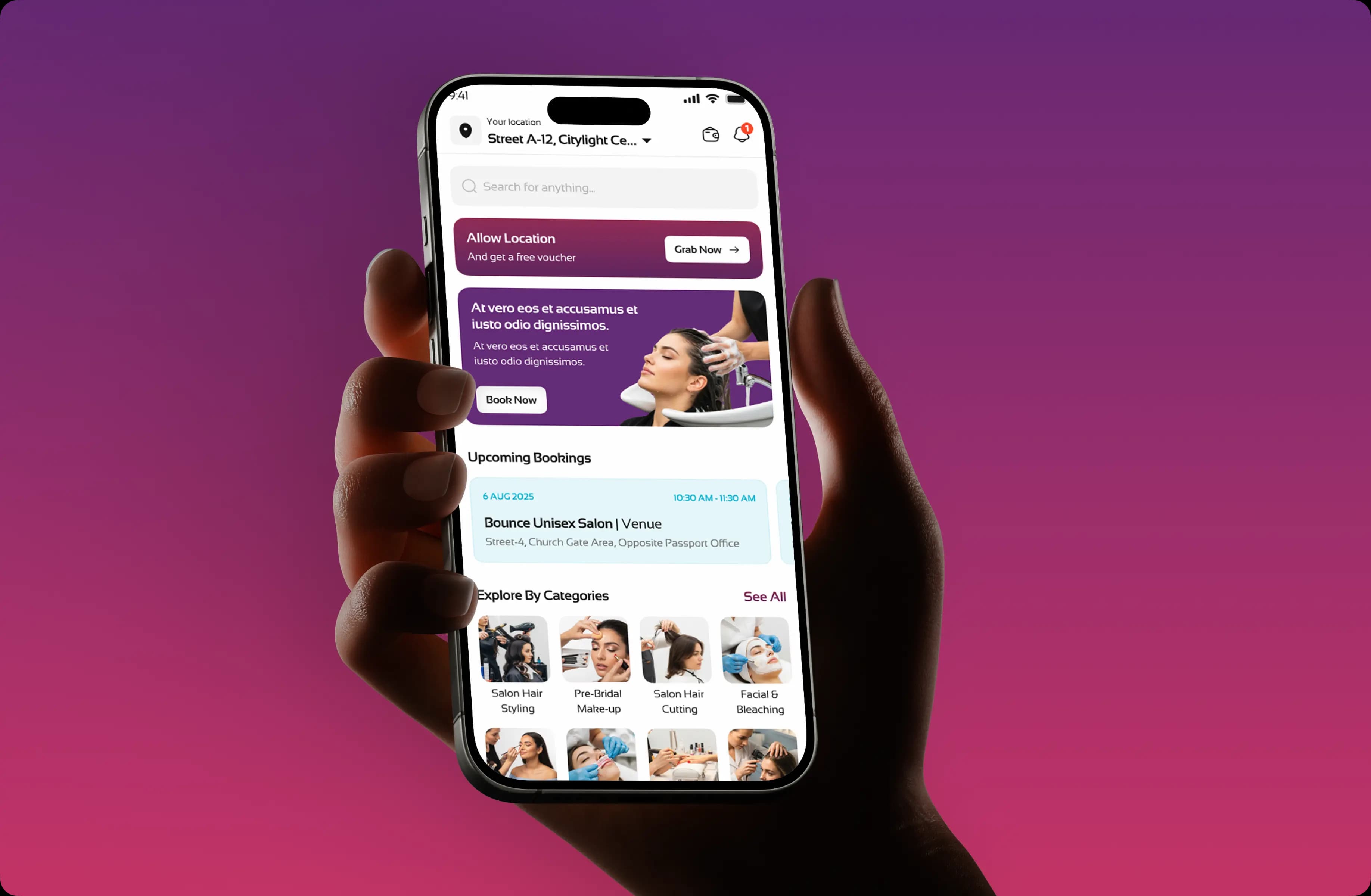
Smart Beauty & Wellness Appointment App – MakeMyLook
/01 · Finance / Analytics

Smart Beauty & Wellness Appointment App – MakeMyLook

A full-stack beauty marketplace consumer mobile app, vendor dashboard, and super admin panel designed and delivered by Creuto from scratch.

200+

Vendors Onboarded

40%

Drop-offs Reduced

16 wk

Time to Market

View Case Study
Enterprise Workflow Automation & Process Management Platform
/02 · Operations / Workflow

Enterprise Workflow Automation & Process Management Platform

A full-stack workflow management platform — admin panel, task boards, collaboration engine, and reporting suite — designed and delivered by Creuto from the ground up.

1

Source of Truth for All Work

100%

Task Audit Trail

4

Task Lifecycle States

View Case Study
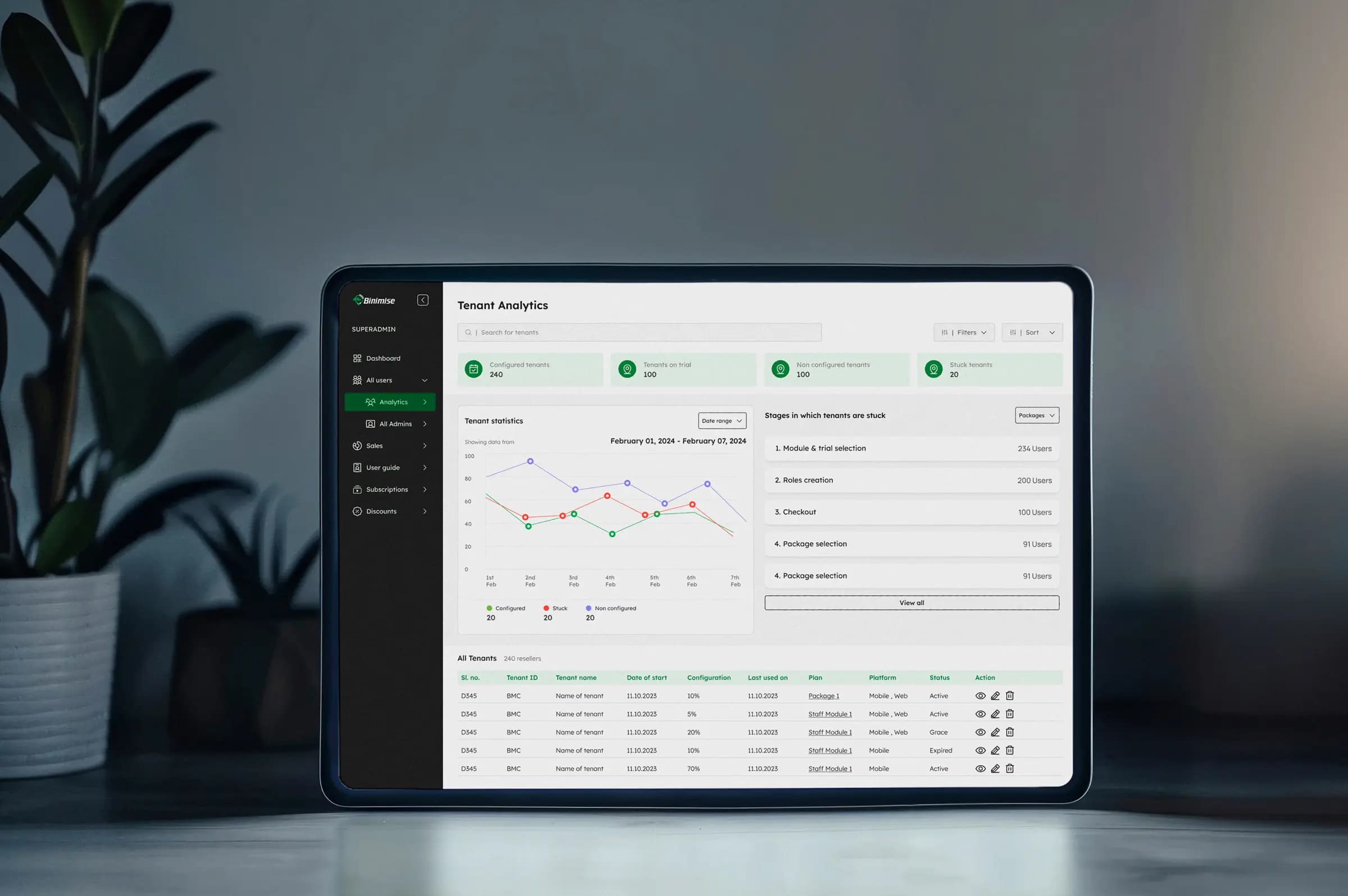
IoT Smart City Platform for Binimise
/03 · Smart City / IoT

IoT Smart City Platform for Binimise

A cloud-native, IoT-powered smart city platform — web command dashboard, citizen mobile app, field staff app, and full IoT integration designed and delivered by Creuto from the ground up.

10

Integrated Modules

25–30%

Reduction in Vehicle Trips

4

Platforms Delivered

View Case Study
COMPLIANCE AND SECURITY

Compliance and security, designed in.

The hospital management systems standards we build against and the controls behind them. Your compliance team keeps ownership; we make the software easy to certify.

Hospital regulations we build for

  • HIPAA and HITECH (United States)
  • GDPR health-data provisions (EU and UK)
  • UAE PDPL and DHA / DoH health data rules
  • India DPDP Act and ABDM standards
  • ISO/IEC 27001 aligned controls
  • Support for JCI and NABH documentation needs
  • Business Associate Agreements on request

Interoperability and coding

  • HL7 v2.x ADT, ORM and ORU messaging
  • HL7 FHIR R4
  • DICOM for imaging workflows
  • SNOMED CT, ICD-10 and LOINC coding
  • X12 837 / 835 claims where applicable
  • IHE profiles where required

Security controls

  • Encryption in transit and at rest
  • Role and site-based access control
  • Immutable audit trails
  • Single sign-on for clinical staff
  • Penetration testing before launch
  • Backup, disaster recovery and tested restores

Platform quality

  • High availability for 24/7 operations
  • Load testing for peak admission periods
  • Automated regression testing per module
  • Migration validation and reconciliation
  • Accessibility to WCAG 2.2 AA
  • 24/7 monitoring and alerting
INTEGRATIONS

Hospital Management Systems integrations we connect.

The platforms, standards and third-party services a product in this sector usually has to talk to. If yours is not listed, it is almost certainly something we have connected before.

/01Clinical systems

  • Epic
  • Oracle Health (Cerner)
  • MEDITECH
  • OpenEMR
  • Existing HIS via HL7
  • Mirth Connect
  • HAPI FHIR

/02Diagnostics and pharmacy

  • Laboratory systems via HL7 ORU
  • PACS and RIS via DICOM
  • Pharmacy and dispensing systems
  • Blood bank systems
  • Medical device and monitor gateways

/03Payments and insurance

  • Stripe
  • Razorpay
  • Network International
  • Insurance eligibility and pre-authorisation APIs
  • Claims clearinghouses (X12 837 / 835)
  • ERP and accounting systems

/04Communication and identity

  • Twilio
  • WhatsApp Business API
  • SendGrid
  • Microsoft Entra ID
  • ABDM gateway (India)
  • National ID and Emirates ID verification
WHY CREUTO

Why choose Creuto as your hospital management systems software development company

The reasons clients in this sector give when they recommend us, not the ones we would pick ourselves.

Either we build it exceptional, or we don't.

The standard every hospital management systems product leaves our studio with.

0+

Products delivered

0+

Years of engineering

0%

Client satisfaction

Start a conversation
  1. /01

    We design around patient flow

    Modules are shaped by the handoffs between departments, which is where delays and lost revenue actually occur, rather than by a generic feature list.

  2. /02

    Coexistence with what you already run

    We integrate with your EHR, LIS, PACS and finance systems through HL7, FHIR and DICOM, replacing components only when it makes sense.

  3. /03

    Rollouts that do not stop the hospital

    Phased deployment, data migration with reconciliation and on-site support keep wards, theatres and billing running throughout the change.

  4. /04

    Built for groups as well as single sites

    Multi-site master data, tenancy and reporting are part of the architecture, so adding a hospital does not mean a new system.

  5. /05

    A long-term operations partner

    Monitoring, interface maintenance and a measured roadmap keep the platform aligned with new services, payers and regulations.

BENEFITS

Benefits of custom hospital management systems software over off-the-shelf tools.

What organisations in this sector gain when the software is built around their workflows rather than the other way around.

  1. 01

    Better use of beds

    Real-time bed status and discharge planning shorten waits for admission and make capacity visible to everyone who needs it.

  2. 02

    Less revenue leakage

    Charge capture at the point of care, pre-authorisation and claim tracking reduce missed charges and denials.

  3. 03

    Less manual coordination

    Requests to pharmacy, porters, labs and housekeeping are tracked digitally instead of chased by phone.

  4. 04

    One view across the group

    Shared master data and group reporting let leadership compare sites and plan services with confidence.

  5. 05

    Faster discharge

    Coordinated pharmacy, transport and documentation tasks remove the delays that keep medically fit patients in beds.

  6. 06

    Audit-ready operations

    Access logs, approvals and reports are available on demand for regulators, accreditation bodies and payers.

HOW WE WORK

Our hospital management systems software development process.

Transparent, sprint-based and built around decisions you can see. You know what ships, when, and why at every step.

Start Your Project
  1. 01

    Operational discovery

    We walk patient flow with ward, theatre, pharmacy and finance teams, inventory every existing system and agree the operational and financial outcomes the platform must improve.

  2. 02

    Architecture and compliance plan

    Module boundaries, master data, integration catalogue, hosting model, access rules and the regulations in scope are agreed before design, together with a phased rollout sequence.

  3. 03

    Workflow design and staff validation

    Prototypes are tested with nurses, bed managers, cashiers and administrators on the devices they actually use, including shared workstations and handheld tablets.

  4. 04

    Agile engineering by module

    Two-week sprints deliver working modules reviewed by department leads, with integrations built against test HL7 feeds and vendor sandboxes from the start.

  5. 05

    Integration, migration and hardening

    Interface testing, trial migrations with reconciliation, load testing for peak admissions, failover drills and a penetration test before each module goes live.

  6. 06

    Phased go-live and optimisation

    Department-by-department cut-over with training and on-site support, then a roadmap driven by occupancy, flow and revenue data from the live system.

TECHNOLOGY STACK

Technology stack for hospital management systems software development.

Chosen per project for longevity, hiring depth and fit with your existing systems, never by fashion.

/01Mobile

  • Kotlin
  • Swift
  • Flutter
  • React Native

/02Web and backend

  • React
  • Next.js
  • TypeScript
  • Node.js
  • NestJS
  • .NET
  • Java
  • Spring Boot

/03Interoperability

  • HAPI FHIR
  • Mirth Connect
  • Google Cloud Healthcare API
  • Azure Health Data Services
  • HL7
  • FHIR
  • DICOM

/04Data and analytics

  • PostgreSQL
  • Redis
  • Elasticsearch
  • Kafka
  • ClickHouse
  • Snowflake
  • Grafana

/05Cloud and DevOps

  • AWS
  • Azure
  • Google Cloud
  • Docker
  • Kubernetes
  • Terraform
  • GitHub Actions

/06AI and forecasting

  • Claude
  • OpenAI
  • Python
  • Scikit-learn
  • PyTorch
  • LangChain

/07Security and identity

  • OAuth 2.0
  • OpenID Connect
  • SAML
  • Keycloak
  • AWS KMS
  • Vault

AI IN HOSPITAL MANAGEMENT SYSTEMS

AI that sees the bottleneck before the queue.

We add AI to hospital management systems where it improves flow and revenue: forecasting demand, flagging delayed discharges and catching billing gaps, with clear explanations and human approval on every action.

Explore our AI engineering
  • Admission and discharge forecasting
  • Length of stay and bed demand prediction
  • Theatre schedule optimisation
  • Charge capture and coding gap detection
  • Claim denial risk scoring
  • Staffing and roster demand forecasting
TRENDS

Trends shaping hospital management systems software right now.

The shifts we design for so a product launched this year is still the right product in three.

  1. 01

    Hospital command centres

    Hospitals are bringing capacity, flow and staffing data into one live view, so operations teams act on bottlenecks as they form.

  2. 02

    Predictive capacity planning

    Machine learning forecasts admissions, discharges and length of stay, helping teams plan beds, theatres and staffing ahead of demand.

  3. 03

    Modular and cloud-hosted HIS

    Hospitals are moving from monolithic on-premise systems to modular, cloud-hosted platforms that integrate through FHIR and can be upgraded in parts.

  4. 04

    Digital front doors

    Patients expect to book, pre-register, pay and receive discharge information on their phones, which connects patient apps directly to hospital operations.

  5. 05

    National health data programmes

    Initiatives such as India's ABDM and UAE health information exchanges require hospitals to share records through standard interfaces and consent frameworks.

  6. 06

    Data residency for hospital groups

    Regional groups in the UAE, Saudi Arabia and India must keep patient data in-country, shaping hosting and architecture decisions.

COST AND TIMELINE

How much does hospital management systems software development cost?

There is no honest single number. Scope, integrations and compliance drive the budget, so we price against a written scope after discovery. The factors below are what move it.

  1. 01

    Number of modules

    Each department module, from bed management to theatre or pharmacy, adds design, build and validation effort.

  2. 02

    Integrations in scope

    EHR, LIS, PACS, finance, insurance and payment connections each add mapping, sandbox access and testing.

  3. 03

    Number of sites

    Multi-hospital groups need shared master data, tenancy, site configuration and group reporting.

  4. 04

    Data migration

    Historical patients, bills and inventory from legacy systems must be mapped, cleaned and reconciled.

  5. 05

    Hosting and availability

    On-premise, hybrid or multi-region cloud deployments and high-availability targets change infrastructure and testing scope.

  6. 06

    Analytics and AI

    Command centre dashboards and forecasting models add data engineering, evaluation and governance work.

EngagementTypical scopeTimeline
Validation MVPOne module such as bed management or OPD, one integration, core roles, audit and dashboards.10 to 14 weeks
Production platformCore HMS modules for one hospital: admissions, billing, pharmacy, rostering, integrations and reporting.4 to 7 months
Enterprise or multi-siteMulti-hospital HIS with shared master data, migration, command centre analytics and forecasting.8 to 14 months, phased
BUSINESS MODELS

How hospital management systems products make money.

Revenue models we have built billing, reporting and growth loops for. Most products combine two or three.

  1. 01

    Enterprise licensing

    Annual licences per hospital or bed band, with implementation and support fees.

  2. 02

    SaaS subscriptions

    Per-bed or per-module monthly plans for small and mid-sized hospitals and day-care centres.

  3. 03

    Implementation services

    Configuration, migration, training and integration delivered as fixed-scope projects.

  4. 04

    Module upsell

    Theatre, pharmacy, analytics and patient app modules sold as extensions to the core system.

  5. 05

    Revenue cycle services

    Claims processing and denial management offered as a managed service on top of the platform.

HOW WE DELIVER

Services behind our hospital management systems work

The engineering disciplines every project in this sector draws on. Each has its own page with process, stack and FAQs.

TESTIMONIALS

Don't take our word for it.

Founders and product leaders on what it is like to build with Creuto.

“What stood out the most about Creuto was their exceptional UI/UX expertise.”

Creuto's work led to a significant increase in engagement, user interaction, and time spent on pages for the client. The team's project management, timely delivery, and receptiveness to feedback were commendable. Moreover, Creuto's UI/UX expertise and thoughtful designs stood out.

RM

Rounak Mehra

Co-Founder, Indus AI

Read on Clutch

More client voices

/01 of 06

on Clutch
FAQ

Frequently Asked Questions

Straight answers about hospital management systems software projects. If yours is not here, ask us directly.

Ask our hospital management systems team

It depends on the number of modules, the integrations with EHR, lab, imaging and finance systems, the number of sites, the volume of data to migrate and your hosting and availability requirements. A single-module MVP is a much smaller investment than a multi-hospital HIS. After discovery we provide a fixed-scope proposal with a clear breakdown.

A validation MVP for one module such as bed management or outpatient typically takes 10 to 14 weeks. Core HMS modules for one hospital usually take four to seven months. Multi-hospital platforms with migration and analytics are delivered in phases over eight to fourteen months, so operations are never interrupted.

It depends on where you operate. Common requirements include HIPAA and HITECH in the United States, GDPR in the EU and UK, UAE PDPL with DHA and DoH rules, and India's DPDP Act and ABDM standards. We also support the documentation needed for accreditation such as JCI or NABH. We map the applicable set during discovery.

Yes. Integration with existing clinical systems is core to every hospital platform we build. We connect to Epic, Oracle Health (Cerner), MEDITECH and existing HIS products, laboratory systems and PACS using HL7 v2, FHIR R4 and DICOM, monitored through an integration engine such as Mirth Connect.

App development usually refers to a specific mobile or web application, such as a patient booking app or a nurse task app. Hospital management software development covers the full platform: modules for each department, integrations, master data, billing, reporting and security. We deliver both, as one connected system.

Yes. We usually deploy module by module, starting with the areas that deliver the fastest operational gains, such as bed management or billing. Each phase includes migration, training and on-site support, and legacy systems keep running until the new module is proven.

Yes. We design multi-facility platforms with shared patient and master data, site-level configuration for tariffs, rosters and policies, and group reporting so leadership can compare performance across hospitals.

Yes. We deploy to AWS, Azure or Google Cloud regions that satisfy local data-residency rules, on-premise in your data centre, or in a hybrid model where some components stay on site. The choice is driven by regulation, connectivity and your infrastructure strategy.

LET'S BUILD

Planning a hospital management systems product? Let's scope it together.

Tell us what you are building. We will help you scope it, design it, and ship it, with a senior team accountable end to end.

  • Reply within one business day
  • NDA on request
  • Senior engineers only
  • Fixed scope, no surprises