Creuto is now an OpenAI Select Partner Read More

Healthcare · Specialisation

EHR Software Development Services

Patient Records That Work for Clinicians, Not Against Them.

We develop, customise, and integrate electronic health record systems, connecting EHRs with labs, pharmacies, devices, and patient apps through HL7 and FHIR so clinical data is complete, accurate, and available where care happens.

  • HL7 v2, FHIR R4 and SMART on FHIR
  • Epic, Oracle Health and athenahealth integration
  • Senior-only engineering team

Plan your ehr & emr solutions project

Tell us what you want to build. A senior engineer, not a sales script, replies within one business day.

What's your budget range?

Your idea is protected. NDA available on request.

Trusted by teams building what's next

  • Creuto client 1
  • Creuto client 2
  • Creuto client 3
  • Creuto client 4
  • Creuto client 5
  • Creuto client 6
  • Creuto client 7
  • Creuto client 8
  • Creuto client 9
  • Creuto client 10
  • Creuto client 11
  • Creuto client 12
  • Creuto client 13
  • Creuto client 14
OVERVIEW

Software shaped around how ehr & emr solutions really works.

Electronic records should make clinical work faster, yet many organisations still live with slow interfaces, rigid templates and data trapped in separate systems. Lab results arrive as PDFs, medication lists differ between departments, and clinicians re-key the same history at every encounter. Each gap costs time at the point of care and introduces risk that training alone cannot remove, which is why the record is so often the first system an organisation sets out to modernise.

As an EHR software development company, we build specialty EHR and EMR systems, modules that extend an existing record, and the integration layer that connects it to labs, pharmacies, imaging and patient apps. We design around how a clinician actually documents an encounter: what they need to see first, what can be pre-filled, and which structured fields billing, reporting and decision support depend on further down the line.

Interoperability sits at the centre of every build. We exchange data using HL7 v2 messaging, FHIR R4 resources and SMART on FHIR apps, code clinical concepts with SNOMED CT, ICD-10 and LOINC, and connect to Epic, Oracle Health (Cerner), athenahealth, MEDITECH and eClinicalWorks through their published interfaces. Where a legacy system has no modern API, we build middleware with Mirth Connect or HAPI FHIR rather than relying on manual exports.

Records hold the most sensitive data an organisation owns, so access control, consent and audit trails are part of the data model from the first sprint, supporting HIPAA, GDPR, UAE PDPL, DHA and DoH rules, and India's DPDP Act and ABDM. For US products that need ONC certification, we align the architecture with the certification criteria early, so testing confirms the design rather than forcing a late rework.


Why ehr & emr solutions teams build with Creuto

Specialty EHR design

Record structures, templates and workflows built for a specific specialty such as oncology, cardiology, dental or behavioural health, rather than a generic chart every department has to work around.

HL7 v2 and FHIR R4 interfaces

ADT, ORM, ORU and SIU feeds over MLLP alongside FHIR R4 APIs and SMART on FHIR launch, so new and legacy systems exchange data without manual re-keying.

Structured clinical documentation

Smart templates, pre-filled history and coded fields using SNOMED CT, ICD-10 and LOINC, so notes are quick to write and still useful for billing, reporting and decision support.

Safe data migration

Mapped, validated and reconciled migration of demographics, problems, medications, allergies, results and documents, with trial runs and clinical sign-off before any legacy record is retired.

Access control and audit

Role and context-based access, break-glass workflows, consent records and immutable audit logs that show who viewed or changed each record, when and why, ready for HIPAA and GDPR review.

AI-assisted charting

Ambient note drafting, problem list suggestions and record summarisation with clinician review and sign-off, reducing documentation time without handing clinical judgement to a model.

0+

Products delivered

0+

Years of engineering

0%

Client satisfaction

0+

Industries served

0+

Countries with live products

WHAT WE BUILD

EHR & EMR Solutions software solutions we build.

Each one designed with your teams, integrated with the systems you already run, and engineered to scale.

RELATED AREAS

More Healthcare software we build

Other healthcare areas with a dedicated page.

TYPES OF SOLUTIONS

Types of ehr & emr solutions apps and software we develop.

The product categories ehr & emr solutions organisations most often ask us to build, from focused mobile apps to multi-tenant platforms.

  1. 01

    Specialty EHR systems

    Purpose-built records for oncology, cardiology, orthopaedics, dental, ophthalmology and behavioural health, with the templates and workflows each specialty expects.

  2. 02

    Ambulatory and clinic EMR software

    Charting, scheduling, e-prescribing and billing for outpatient clinics and multi-location practices.

  3. 03

    Inpatient EHR modules

    Admission notes, nursing documentation, medication administration records and discharge summaries that extend or replace parts of an existing hospital system.

  4. 04

    Patient portals and personal health records

    Patient access to records, results and documents through FHIR-based APIs, with proxy access for carers and guardians.

  5. 05

    Health information exchange platforms

    Hubs that route, match and reconcile records between hospitals, labs and payers using HL7 v2, FHIR and a master patient index.

  6. 06

    SMART on FHIR apps

    Apps that launch inside Epic, Oracle Health and other EHRs with patient context, adding specialty tools without replacing the core record.

  7. 07

    Clinical data repositories

    Longitudinal, coded patient data stores that feed analytics, registries, research and population health programmes.

  8. 08

    EHR integration engines

    Interface layers built on Mirth Connect or HAPI FHIR that translate, route and monitor clinical messages across systems.

  9. 09

    EHR migration and archiving solutions

    Legacy data extraction, transformation and read-only archives that keep historical records accessible after a system is retired.

KEY FEATURES

Must-have features of a ehr & emr solutions platform we build in.

Grouped by who uses them. Every feature below is one we have shipped to production, not a wishlist.

/01

Clinician workspace

Everything needed during an encounter, in as few clicks as possible.

  • Patient summary and clinical timeline
  • Specialty templates and smart forms
  • Problem, medication and allergy lists
  • Order entry for labs and imaging
  • E-prescribing with interaction checks
  • Results review and acknowledgement
  • Clinical decision support alerts
  • AI-drafted notes with clinician sign-off
/02

Patient and care team access

Sharing the record safely beyond the clinic.

  • Patient portal with results and documents
  • FHIR patient access API
  • Proxy access for carers and guardians
  • Secure messaging with the care team
  • Referral and transition of care summaries
  • Consent preferences and sharing controls
  • Visit and appointment history
  • Record downloads in standard formats
/03

Admin and interoperability console

Control over access, interfaces and data quality.

  • Role, permission and break-glass policies
  • Master patient index and record matching
  • HL7 and FHIR interface monitoring
  • Terminology mapping and code management
  • Audit logs and access reports
  • Data import, export and migration tools
  • Multi-facility and specialty configuration
  • Quality measure and regulatory reporting
CHALLENGES WE SOLVE

What holds ehr & emr solutions teams back.

The problems we most often help ehr & emr solutions organisations solve, and design every engagement around.

  1. 01

    Data silos

    Labs, imaging, pharmacy and billing data often live outside the core record, so clinicians piece together a patient's history from several screens, faxes and scanned documents.

  2. 02

    Documentation burden

    Rigid templates, duplicate entry and excessive clicks slow clinicians down, push charting into evenings and encourage copy-forward notes that reduce the quality of the record.

  3. 03

    Risky migrations

    Moving records between systems must preserve accuracy, history and coding. One mapping error in medications or allergies can follow a patient into every future encounter.

  4. 04

    Closed vendor interfaces

    Some EHR platforms limit API access or charge per interface, which makes it hard to add specialty tools, patient apps or analytics without long vendor queues.

  5. 05

    Certification and national standards

    US products face ONC certification criteria and information-blocking rules, while other markets expect national frameworks such as ABDM, so compliance has to shape the architecture early.

SELECTED WORK

Products we have shipped. Results we can point to.

Real products designed and engineered by Creuto end to end, with the operational depth healthcare and ehr & emr solutions projects demand.

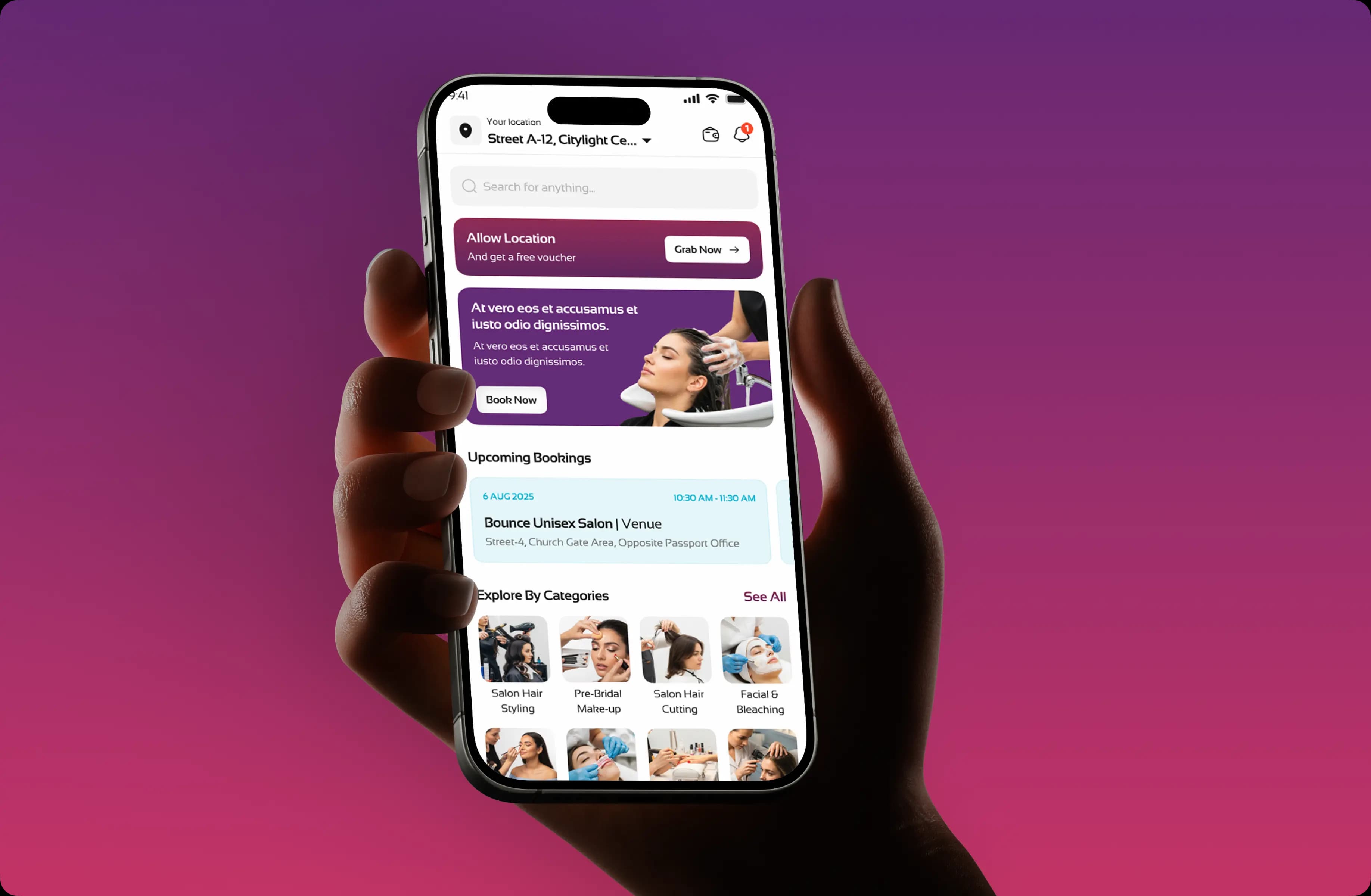
Smart Beauty & Wellness Appointment App – MakeMyLook
/01 · Finance / Analytics

Smart Beauty & Wellness Appointment App – MakeMyLook

A full-stack beauty marketplace consumer mobile app, vendor dashboard, and super admin panel designed and delivered by Creuto from scratch.

200+

Vendors Onboarded

40%

Drop-offs Reduced

16 wk

Time to Market

View Case Study
Enterprise Workflow Automation & Process Management Platform
/02 · Operations / Workflow

Enterprise Workflow Automation & Process Management Platform

A full-stack workflow management platform — admin panel, task boards, collaboration engine, and reporting suite — designed and delivered by Creuto from the ground up.

1

Source of Truth for All Work

100%

Task Audit Trail

4

Task Lifecycle States

View Case Study
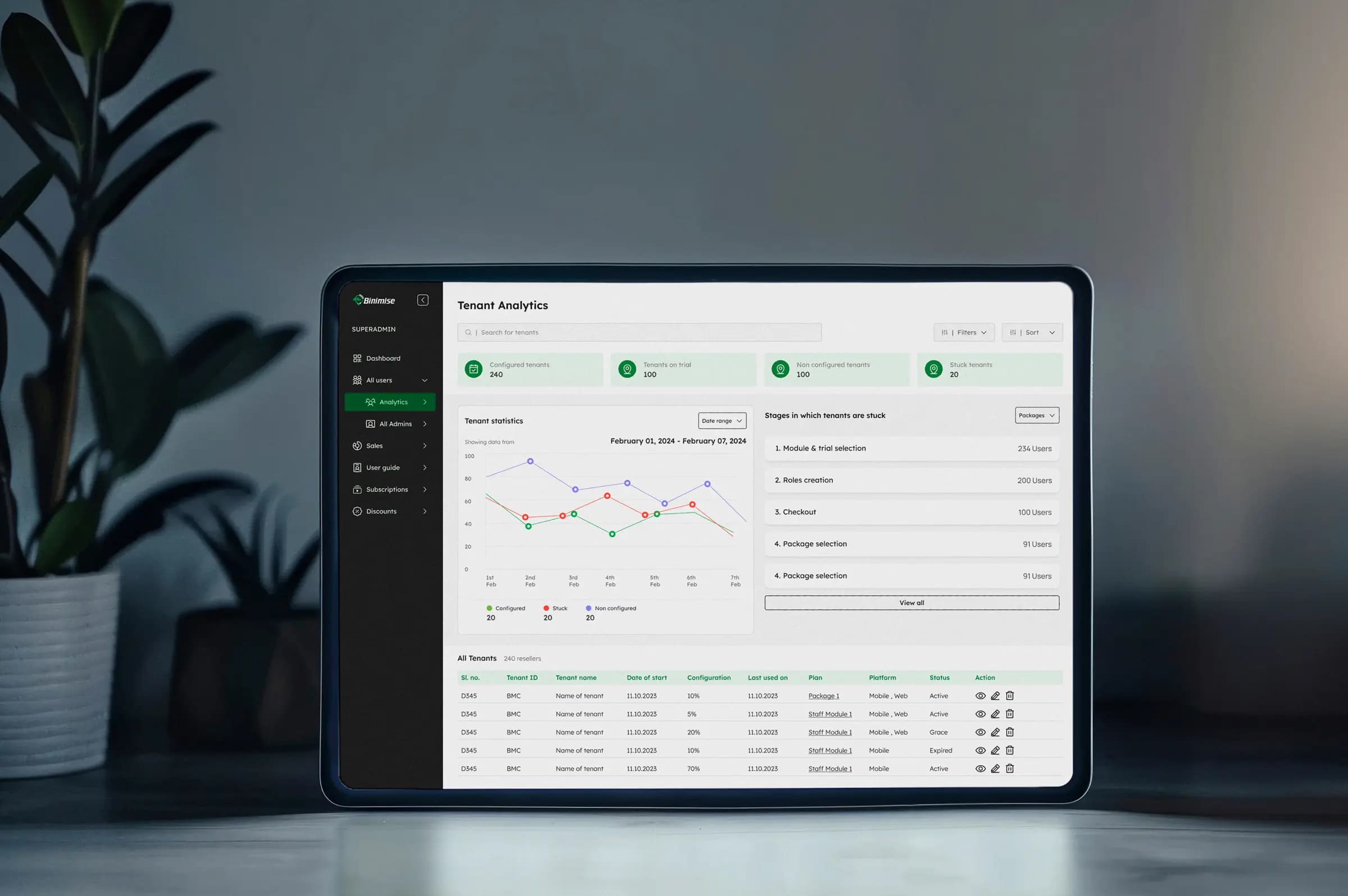
IoT Smart City Platform for Binimise
/03 · Smart City / IoT

IoT Smart City Platform for Binimise

A cloud-native, IoT-powered smart city platform — web command dashboard, citizen mobile app, field staff app, and full IoT integration designed and delivered by Creuto from the ground up.

10

Integrated Modules

25–30%

Reduction in Vehicle Trips

4

Platforms Delivered

View Case Study
COMPLIANCE AND SECURITY

Compliance and security, designed in.

The ehr & emr solutions standards we build against and the controls behind them. Your compliance team keeps ownership; we make the software easy to certify.

EHR regulations we build for

  • HIPAA and HITECH (United States)
  • ONC Health IT Certification criteria
  • 21st Century Cures Act information-blocking rules
  • GDPR health-data provisions (EU and UK)
  • UAE PDPL and DHA / DoH health data rules
  • India DPDP Act and ABDM standards
  • Business Associate Agreements on request

Interoperability and terminology

  • HL7 v2.x messaging (ADT, ORM, ORU, SIU)
  • HL7 FHIR R4 and US Core profiles
  • SMART on FHIR app launch
  • C-CDA documents for transitions of care
  • SNOMED CT, ICD-10 and LOINC coding
  • DICOM for linked imaging
  • IHE profiles such as PIX and PDQ

Security controls

  • Encryption in transit and at rest
  • Role and context-based access control
  • Break-glass access with review
  • Immutable access and change audit trails
  • Consent and data-retention management
  • Penetration testing before launch

Platform quality

  • Interface conformance and regression testing
  • Migration validation and reconciliation reports
  • Performance testing for clinic peak hours
  • Accessibility to WCAG 2.2 AA
  • High availability with tested failover
  • 24/7 monitoring and alerting
INTEGRATIONS

EHR & EMR Solutions integrations we connect.

The platforms, standards and third-party services a product in this sector usually has to talk to. If yours is not listed, it is almost certainly something we have connected before.

/01EHR and EMR platforms

  • Epic
  • Oracle Health (Cerner)
  • athenahealth
  • MEDITECH
  • eClinicalWorks
  • OpenEMR
  • Custom HIS via HL7

/02Interoperability tooling

  • HAPI FHIR
  • Mirth Connect
  • Google Cloud Healthcare API
  • AWS HealthLake
  • Azure Health Data Services
  • Terminology servers for SNOMED CT and LOINC

/03Clinical systems and exchanges

  • Laboratory systems via HL7 ORU
  • PACS and imaging via DICOM
  • Surescripts e-prescribing
  • Pharmacy management systems
  • Regional health information exchanges
  • ABDM gateway (India)

/04Patient access and billing

  • Apple Health Records via FHIR
  • Patient portal and mobile apps
  • Twilio
  • Stripe
  • Razorpay
  • Claims clearinghouses (X12 837 / 835)
WHY CREUTO

Why choose Creuto as your ehr & emr solutions software development company

The reasons clients in this sector give when they recommend us, not the ones we would pick ourselves.

Either we build it exceptional, or we don't.

The standard every ehr & emr solutions product leaves our studio with.

0+

Products delivered

0+

Years of engineering

0%

Client satisfaction

Start a conversation
  1. /01

    Interoperability is our daily work

    HL7 v2 feeds, FHIR R4 APIs and SMART on FHIR apps are things we build regularly, including against legacy systems with limited interfaces.

  2. /02

    Clinician time is the success measure

    We measure clicks and charting time before and after, and design templates so the record supports the encounter rather than slowing it.

  3. /03

    Migrations with evidence

    Every migration ships with mapping specifications, reconciliation reports and sign-off records, so clinical and compliance teams can trust the result.

  4. /04

    Build or extend, honestly assessed

    We tell you when extending your current EHR or adding a SMART on FHIR app is a better route than a custom build, and design accordingly.

  5. /05

    Long-term interface ownership

    Vendor upgrades, new message types and regulatory changes are handled through monitoring and support, so integrations keep working after launch.

BENEFITS

Benefits of custom ehr & emr solutions software over off-the-shelf tools.

What organisations in this sector gain when the software is built around their workflows rather than the other way around.

  1. 01

    Faster documentation

    Specialty templates, pre-filled history and AI-assisted drafting give clinicians time back on every encounter.

  2. 02

    A complete patient record

    Labs, imaging, medications and outside records arrive in one chart, reducing duplicated tests and missed information.

  3. 03

    Fewer transcription errors

    Interfaces replace manual re-keying of results, orders and demographics, removing a common source of clinical and billing mistakes.

  4. 04

    Cleaner coding and billing

    Structured, coded documentation supports accurate charge capture and fewer rejected claims.

  5. 05

    Freedom to add new tools

    Standards-based APIs let you add patient apps, analytics and specialty modules without waiting on a single vendor.

  6. 06

    Data ready for analytics and AI

    Coded, longitudinal records feed quality reporting, population health and AI models without months of data cleaning.

HOW WE WORK

Our ehr & emr solutions software development process.

Transparent, sprint-based and built around decisions you can see. You know what ships, when, and why at every step.

Start Your Project
  1. 01

    Clinical and data discovery

    We observe documentation and ordering workflows by specialty, inventory every system that reads or writes the record, and agree the clinical and operational outcomes the project must improve.

  2. 02

    Architecture and compliance plan

    Data model, terminology strategy, interface catalogue, hosting region, consent model and any certification target are documented before design, so compliance shapes the system from the start.

  3. 03

    Workflow design and clinician validation

    Templates and charting flows are prototyped, tested with practising clinicians and timed against the current process until documentation is faster than what it replaces.

  4. 04

    Agile engineering

    Two-week sprints with working software reviewed by clinical leads. Interfaces are built against vendor sandboxes and test HL7 feeds from the early sprints, not at the end.

  5. 05

    Integration, migration and hardening

    Interface conformance testing, trial migrations with reconciliation reports, load testing and a penetration test are completed before any clinician depends on the new record.

  6. 06

    Phased go-live and optimisation

    Clinic-by-clinic or department-by-department cut-over with training, at-the-elbow support and monitoring, followed by a roadmap driven by usage data and clinician feedback.

TECHNOLOGY STACK

Technology stack for ehr & emr solutions software development.

Chosen per project for longevity, hiring depth and fit with your existing systems, never by fashion.

/01Mobile

  • Swift
  • SwiftUI
  • Kotlin
  • Jetpack Compose
  • Flutter
  • React Native

/02Web and backend

  • React
  • Next.js
  • TypeScript
  • Node.js
  • NestJS
  • Java
  • Spring Boot
  • .NET
  • Python

/03Interoperability

  • HAPI FHIR
  • Mirth Connect
  • Google Cloud Healthcare API
  • AWS HealthLake
  • HL7
  • FHIR
  • DICOM

/04Data

  • PostgreSQL
  • MongoDB
  • Redis
  • Elasticsearch
  • Kafka
  • Snowflake

/05Cloud and DevOps

  • AWS
  • Azure
  • Google Cloud
  • Docker
  • Kubernetes
  • Terraform
  • GitHub Actions

/06AI and analytics

  • Claude
  • OpenAI
  • LangChain
  • Whisper
  • pgvector
  • PyTorch

/07Security and identity

  • OAuth 2.0
  • OpenID Connect
  • SAML
  • Keycloak
  • Auth0
  • AWS KMS
  • Vault

AI IN EHR & EMR SOLUTIONS

AI that drafts the chart, clinicians sign it.

We add AI to EHR products where it shortens documentation and surfaces what matters in a long record, with clinician review, links back to source data and an audit trail on every output.

Explore our AI engineering
  • Ambient encounter documentation
  • Chart and history summarisation
  • Suggested problems, codes and orders for review
  • Extraction from scanned documents and faxes
  • Patient matching and duplicate record detection
  • Care gap and quality measure identification
TRENDS

Trends shaping ehr & emr solutions software right now.

The shifts we design for so a product launched this year is still the right product in three.

  1. 01

    FHIR APIs as a regulatory baseline

    US certification rules and national programmes elsewhere increasingly require standardised FHIR APIs for patient and third-party access to records.

  2. 02

    Ambient clinical documentation

    AI that listens to the encounter and drafts the note for clinician review is moving into routine use as organisations tackle documentation burden.

  3. 03

    SMART on FHIR app ecosystems

    Health systems extend their core EHR with specialty apps that launch in context, rather than replacing the record to gain one feature.

  4. 04

    National health record programmes

    India's ABDM and UAE exchanges such as Malaffi and NABIDH link records across providers through shared identifiers and consent frameworks.

  5. 05

    Information-blocking enforcement

    US rules penalise unreasonable restrictions on access to electronic health information, pushing vendors and providers toward open, documented interfaces.

  6. 06

    Managed cloud FHIR services

    FHIR services from AWS, Azure and Google Cloud make longitudinal records and analytics easier to run within data-residency rules.

COST AND TIMELINE

How much does ehr & emr solutions software development cost?

There is no honest single number. Scope, integrations and compliance drive the budget, so we price against a written scope after discovery. The factors below are what move it.

  1. 01

    Build, extend or integrate

    A new specialty EHR is a larger build than SMART on FHIR apps or an integration layer around an existing record.

  2. 02

    Number of interfaces

    Each EHR, lab, pharmacy, imaging or exchange connection adds analysis, sandbox access, mapping and conformance testing.

  3. 03

    Data migration scope

    Volume, data quality and the number of legacy systems determine the mapping, trial runs and reconciliation effort.

  4. 04

    Certification targets

    ONC certification or national frameworks such as ABDM add specific functional requirements, documentation and test effort.

  5. 05

    Specialty template depth

    The number of specialties, templates and coded data sets drives clinical design and validation work.

  6. 06

    AI and decision support

    Ambient documentation and decision support need evaluation, governance and clinician review loops beyond standard features.

EngagementTypical scopeTimeline
Validation MVPOne specialty workflow or SMART on FHIR app, one EHR integration, core security and audit.10 to 14 weeks
Production platformSpecialty EHR or integration hub with clinician and patient access, multiple interfaces, admin console and migration.4 to 7 months
Enterprise or multi-siteMulti-specialty or multi-facility record platform, information exchange, large-scale migration, analytics and AI.8 to 14 months, phased
BUSINESS MODELS

How ehr & emr solutions products make money.

Revenue models we have built billing, reporting and growth loops for. Most products combine two or three.

  1. 01

    Per-provider subscriptions

    Monthly or annual pricing per clinician or per location, tiered by modules and specialty content.

  2. 02

    Enterprise licensing

    Annual licences with implementation, migration and support fees for hospitals and health systems.

  3. 03

    Interface and exchange fees

    Charges per connected system or message volume for integration hubs and exchange platforms.

  4. 04

    EHR marketplace distribution

    SMART on FHIR apps sold through EHR vendor app marketplaces to organisations already on that platform.

  5. 05

    Revenue cycle add-ons

    Coding assistance, claims and billing modules priced as optional extensions to the core record.

HOW WE DELIVER

Services behind our ehr & emr solutions work

The engineering disciplines every project in this sector draws on. Each has its own page with process, stack and FAQs.

TESTIMONIALS

Don't take our word for it.

Founders and product leaders on what it is like to build with Creuto.

“They built a technically robust platform and ensured it was intuitive and accessible for investors of all levels.”

Thanks to Creuto's work, the client saw steady app growth in transactions and SIPs, full regulatory compliance, and positive user feedback. The team had excellent project management, delivered timely milestones, and communicated proactively. Creuto's understanding of the client's industry stood out.

CW

Colton Wade

CEO, Breuto

Read on Clutch

More client voices

/01 of 06

on Clutch
FAQ

Frequently Asked Questions

Straight answers about ehr & emr solutions software projects. If yours is not here, ask us directly.

Ask our ehr & emr solutions team

It depends on whether you are building a new specialty EHR, extending an existing one or adding an integration layer, plus the number of interfaces, the volume and quality of data to migrate, and any certification target such as ONC. After a short discovery we provide a fixed-scope proposal with a clear breakdown rather than a single headline figure.

A validation MVP covering one specialty workflow or a SMART on FHIR app with one integration typically takes 10 to 14 weeks. A production specialty EHR or integration hub usually takes four to seven months. Multi-specialty or multi-facility platforms with large migrations are delivered in phases over eight to fourteen months.

We build EHR software with the technical safeguards HIPAA requires and sign Business Associate Agreements where our role requires it. For ONC certification we align the design with the applicable certification criteria and prepare for testing with an authorised testing laboratory. Certification itself is granted to your organisation through the official programme, and we support you through it.

Yes, where the vendor provides interface or API access. We use HL7 v2, FHIR R4 and SMART on FHIR with Epic, Oracle Health (Cerner), athenahealth, MEDITECH and eClinicalWorks, usually through their developer programmes, and we build middleware with Mirth Connect or HAPI FHIR for systems with limited APIs.

EHR app development usually means a clinician or patient-facing application, such as a mobile charting tool, a patient portal or a SMART on FHIR app. EHR software development covers the whole record system: data model, terminology, interfaces, access control, audit, migration and reporting. We deliver either, and connect apps to the record through standard APIs.

It depends on your specialty, scale and how well current products fit your workflows. Many organisations get more value from extending an existing EHR with SMART on FHIR apps or an integration layer. A custom build makes sense when no product fits the specialty or the record is core to your own product. We assess both options and recommend the most practical path.

We map every source field to the target model, run trial migrations on controlled copies, reconcile record counts and clinical content such as medications and allergies, and keep audit records of each step. Legacy systems stay available in read-only mode until clinical and compliance leads sign off on the result.

We work with HL7 v2 messaging, HL7 FHIR R4 and US Core profiles, SMART on FHIR, C-CDA documents, DICOM for imaging links, and SNOMED CT, ICD-10 and LOINC for coding. We also use IHE profiles and national frameworks such as ABDM in India where a project requires them.

LET'S BUILD

Planning a ehr & emr solutions product? Let's scope it together.

Tell us what you are building. We will help you scope it, design it, and ship it, with a senior team accountable end to end.

  • Reply within one business day
  • NDA on request
  • Senior engineers only
  • Fixed scope, no surprises