Creuto is now an OpenAI Select Partner Read More

Industry

Telecom Software Development Services

Modern Software for Networks, Subscribers, and Services.

We build customer self-service apps, billing and subscription systems, network monitoring dashboards, and field service tools for telecom operators, ISPs, and communication providers.

  • TM Forum Open API-aligned integration
  • Amdocs, Netcracker, Ericsson and Nokia experience
  • Senior-only engineering team

Plan your telecommunications project

Tell us what you want to build. A senior engineer, not a sales script, replies within one business day.

What's your budget range?

Your idea is protected. NDA available on request.

Trusted by teams building what's next

  • Creuto client 1
  • Creuto client 2
  • Creuto client 3
  • Creuto client 4
  • Creuto client 5
  • Creuto client 6
  • Creuto client 7
  • Creuto client 8
  • Creuto client 9
  • Creuto client 10
  • Creuto client 11
  • Creuto client 12
  • Creuto client 13
  • Creuto client 14
OVERVIEW

Software shaped around how telecommunications really works.

Telecom providers manage complex networks, millions of subscribers and product catalogues that change every month. Legacy BSS and OSS stacks make launching a new plan or bundle slow, customers expect to manage everything from an app, and operations teams need to find network faults before subscribers notice them. Meanwhile 5G, fibre and eSIM are changing what operators sell and how.

As a telecom software development company, we build the digital layer operators need on top of their core systems: subscriber self-service apps, digital onboarding with eSIM, billing and subscription management, order and provisioning workflows, network monitoring dashboards and field service tools for installers and technicians. We design for operators, ISPs, fibre providers and MVNOs alike.

Integration is central to every engagement. We expose and consume TM Forum Open APIs for product catalogue, ordering, inventory and trouble tickets, connect to Amdocs, Netcracker, Ericsson and Nokia BSS and OSS platforms, pull telemetry from network management systems, and integrate CRM, payments and messaging through Salesforce, Stripe and Twilio, so new products reach market without a rebuild of the core.

Security and regulatory compliance are built in from the first sprint. We follow GSMA security guidelines and 3GPP specifications where relevant, protect subscriber data under GDPR and regional laws, support ISO 27001 controls, and design KYC, lawful data retention and consumer protection flows that meet TRAI and DoT rules in India, TDRA in the UAE and CST in Saudi Arabia.

Why telecommunications teams build with Creuto

Subscriber self-service apps

Plans, usage, top-ups, bill payment, add-ons and support in a fast native app, connected to real-time charging so balances and usage are always current.

TM Forum Open API integration

Product catalogue, ordering, inventory and trouble ticket APIs built or consumed to TM Forum Open API specifications, decoupling digital channels from legacy BSS.

Billing and subscription logic

Plans, bundles, promotions, proration, invoicing and payments, whether extending Amdocs or Netcracker or building lighter billing for ISPs and MVNOs.

Network monitoring and assurance

Dashboards and alerting from network telemetry, alarms and probes, with correlation that groups related faults and shows likely subscriber impact.

eSIM and digital onboarding

Remote eSIM provisioning flows aligned with GSMA specifications, digital KYC and number porting, so customers can join without visiting a store where regulation allows.

Telecom AI

Churn prediction, next-best offer, network anomaly detection and support assistants that resolve routine queries, with human handover and clear guardrails.

0+

Products delivered

0+

Years of engineering

0%

Client satisfaction

0+

Industries served

0+

Countries with live products

WHAT WE BUILD

Telecommunications software solutions we build.

Each one designed with your teams, integrated with the systems you already run, and engineered to scale.

SECTORS

Telecommunications sectors we build software for

The organisations and segments we build software for.

  • Mobile Network Operators
  • Internet Service Providers
  • Fibre & Broadband Providers
  • MVNOs
  • Unified Communications Providers
  • IPTV & Media Providers
TYPES OF SOLUTIONS

Types of telecommunications apps and software we develop.

The product categories telecommunications organisations most often ask us to build, from focused mobile apps to multi-tenant platforms.

  1. 01

    Subscriber self-service apps

    Plans, usage, balances, top-ups, bill payment, add-ons and support for prepaid and postpaid customers.

  2. 02

    Telecom billing and subscription management

    Product catalogues, rating, invoicing, promotions and payments for operators, ISPs and MVNOs.

  3. 03

    BSS and OSS modernisation

    Digital layers, API gateways and microservices that wrap or gradually replace legacy billing, CRM and provisioning.

  4. 04

    MVNO and digital brand platforms

    Fully digital onboarding, eSIM activation, plans and support for MVNOs and operator sub-brands.

  5. 05

    Network monitoring and assurance dashboards

    Alarm correlation, KPIs, service health and customer impact views built on network telemetry.

  6. 06

    Order management and provisioning

    Order capture, orchestration and automated service activation across fixed, mobile and fibre networks.

  7. 07

    Field service management apps

    Installer and technician scheduling, job details, equipment tracking and proof of completion.

  8. 08

    Retail and dealer management tools

    Point-of-sale activation, dealer commissions, SIM inventory and KYC capture for retail channels.

  9. 09

    Customer support and contact centre automation

    AI assistants, ticket routing, knowledge bases and agent desktops connected to subscriber data.

  10. 10

    Fibre network planning and inventory

    Coverage maps, serviceability checks, port inventory and build tracking for fibre rollouts.

KEY FEATURES

Must-have features of a telecommunications platform we build in.

Grouped by who uses them. Every feature below is one we have shipped to production, not a wishlist.

/01

Subscriber app

What customers use to manage their service.

  • Real-time usage and balance
  • Plan changes and add-ons
  • Top-ups and bill payments
  • eSIM activation and transfer
  • Digital KYC onboarding
  • Outage and service status alerts
  • In-app chat and support tickets
  • Referral and loyalty rewards
/02

Operations and field tools

For NOC engineers, care agents and technicians.

  • Network alarm and KPI dashboards
  • Fault correlation and impact views
  • Trouble ticket workflows
  • Technician scheduling and dispatch
  • Offline job details and checklists
  • Customer premises equipment tracking
  • Care agent 360-degree subscriber view
  • Order fallout monitoring
/03

Admin and back office

Catalogue, revenue and compliance control.

  • Product catalogue and pricing configuration
  • Promotion and bundle management
  • Billing runs and invoice review
  • Dealer and partner commissions
  • Regulatory and KYC reporting
  • Role-based access and audit logs
  • Integration health for BSS and OSS
  • Churn and revenue analytics
CHALLENGES WE SOLVE

What holds telecommunications teams back.

The problems we most often help telecommunications organisations solve, and design every engagement around.

  1. 01

    Legacy BSS and OSS

    Monolithic billing and provisioning stacks make every new plan, bundle or partner offer a long and expensive change project.

  2. 02

    Customer churn

    Poor self-service, confusing bills and slow support push subscribers to competitors in markets where switching is easy and number portability is standard.

  3. 03

    Network visibility

    Alarms arrive from many vendor systems, and teams struggle to separate root causes from noise and see which customers are affected.

  4. 04

    Regulatory obligations

    Subscriber KYC, data retention, consumer protection and data localisation rules vary by country and change frequently.

  5. 05

    Field service efficiency

    Fibre installations and repairs depend on scheduling, parts and first-time fixes, and missed appointments damage satisfaction quickly.

SELECTED WORK

Products we have shipped. Results we can point to.

Real products designed and engineered by Creuto end to end, with the operational depth telecommunications projects demand.

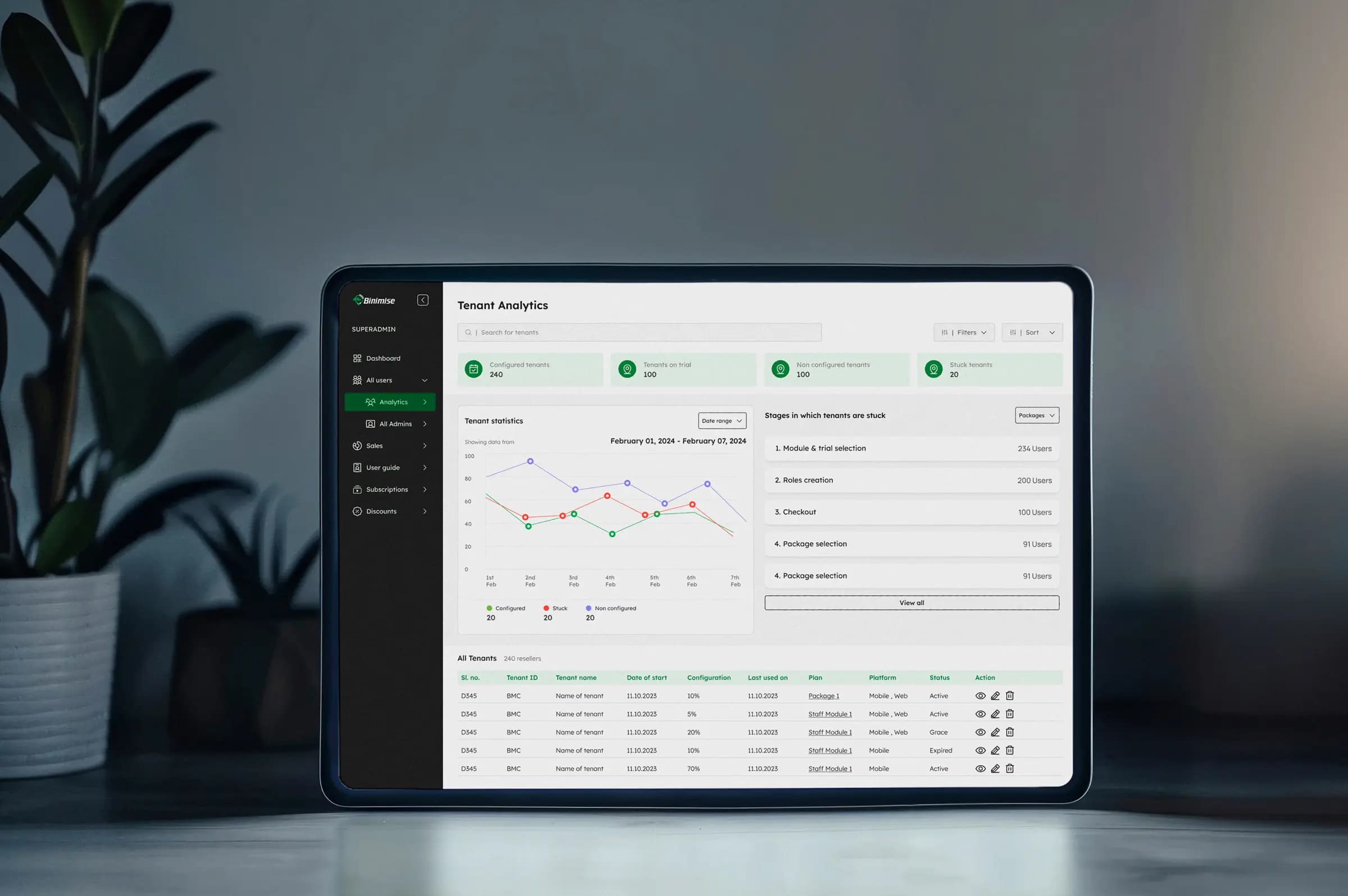
IoT Smart City Platform for Binimise
/01 · Smart City / IoT

IoT Smart City Platform for Binimise

A cloud-native, IoT-powered smart city platform — web command dashboard, citizen mobile app, field staff app, and full IoT integration designed and delivered by Creuto from the ground up.

10

Integrated Modules

25–30%

Reduction in Vehicle Trips

4

Platforms Delivered

View Case Study
Enterprise Workflow Automation & Process Management Platform
/02 · Operations / Workflow

Enterprise Workflow Automation & Process Management Platform

A full-stack workflow management platform — admin panel, task boards, collaboration engine, and reporting suite — designed and delivered by Creuto from the ground up.

1

Source of Truth for All Work

100%

Task Audit Trail

4

Task Lifecycle States

View Case Study
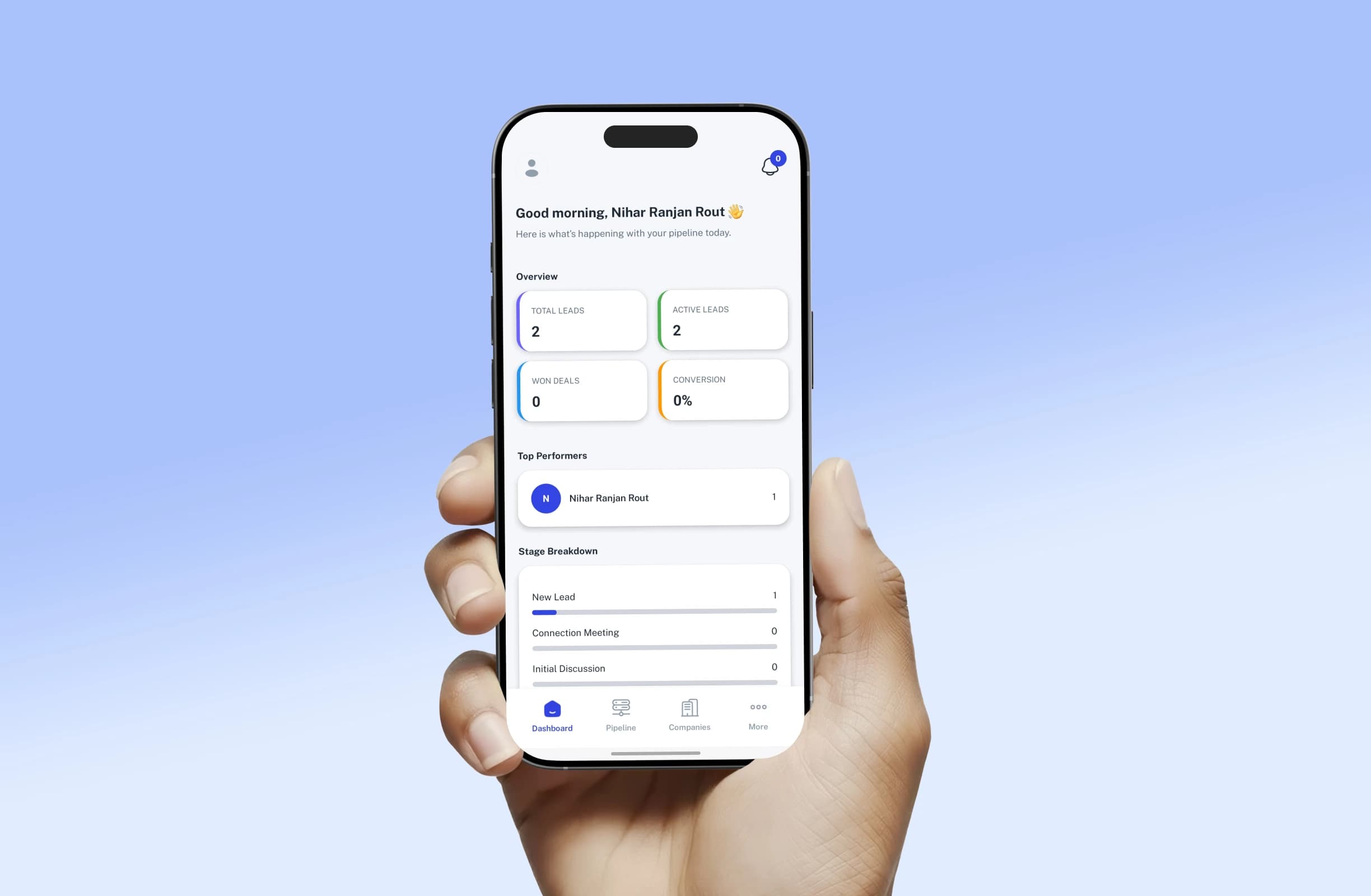
AI-Powered CRM & Sales Engagement Platform
/03 · Sales / CRM

AI-Powered CRM & Sales Engagement Platform

A complete Before-Sales and After-Sales CRM platform — AI-powered market insights, Kanban pipeline management, complaint tracking, and role-based dashboards built and delivered by Creuto end to end.

2

CRM Modules (Before & After)

AI

Market Intelligence Engine

360°

Customer Lifecycle Coverage

View Case Study
COMPLIANCE AND SECURITY

Compliance and security, designed in.

The telecommunications standards we build against and the controls behind them. Your compliance team keeps ownership; we make the software easy to certify.

Telecom regulations we build for

  • TRAI and DoT rules, including subscriber KYC (India)
  • TDRA regulations (UAE)
  • CST regulations (Saudi Arabia)
  • GDPR and ePrivacy rules (EU and UK)
  • FCC CPNI rules (United States)
  • India DPDP Act, UAE PDPL and Saudi PDPL
  • ISO/IEC 27001 aligned controls

Telecom standards

  • TM Forum Open APIs and ODA
  • 3GPP specifications
  • GSMA eSIM specifications (SGP.22 and SGP.32)
  • GSMA security guidelines
  • ETSI NFV and MEC
  • SNMP, NETCONF and YANG

Security controls

  • Encryption in transit and at rest
  • Strong customer authentication and SIM swap checks
  • Role-based access for care and dealer staff
  • Immutable audit trails
  • Fraud detection and rate limiting
  • Penetration testing before launch

Platform quality

  • Load testing at peak recharge and billing volumes
  • High availability and failover
  • Data retention and localisation controls
  • WCAG accessibility for customer apps
  • Requirements traceability and test evidence
INTEGRATIONS

Telecommunications integrations we connect.

The platforms, standards and third-party services a product in this sector usually has to talk to. If yours is not listed, it is almost certainly something we have connected before.

/01BSS and OSS platforms

  • Amdocs
  • Netcracker
  • Ericsson Charging and Billing
  • Nokia OSS
  • Oracle Communications
  • CSG

/02Network and assurance

  • Ericsson Network Manager
  • Nokia NetAct
  • Huawei iMaster NCE
  • Zabbix
  • Prometheus
  • SNMP and NETCONF feeds

/03CRM, care and messaging

  • Salesforce Communications Cloud
  • Microsoft Dynamics 365
  • Zendesk
  • Twilio
  • WhatsApp Business API
  • Firebase Cloud Messaging

/04Payments and identity

  • Stripe
  • Adyen
  • Razorpay and UPI
  • Network International
  • Aadhaar-based eKYC via licensed providers
  • UAE Pass
WHY CREUTO

Why choose Creuto as your telecommunications software development company

The reasons clients in this sector give when they recommend us, not the ones we would pick ourselves.

Either we build it exceptional, or we don't.

The standard every telecommunications product leaves our studio with.

0+

Products delivered

0+

Years of engineering

0%

Client satisfaction

Start a conversation
  1. /01

    We work with your core, not against it

    We extend Amdocs, Netcracker, Ericsson and Nokia stacks through APIs instead of proposing risky core replacements.

  2. /02

    Standards-based integration

    TM Forum Open APIs and clean contracts make digital channels faster to change and easier to maintain.

  3. /03

    Built for scale

    We design for millions of subscribers, recharge peaks and billing runs from the first architecture review.

  4. /04

    Regulatory awareness by market

    KYC, data retention and consumer protection flows are designed for India, the UAE, Saudi Arabia, Europe and the US.

  5. /05

    A long-term engineering partner

    Monitoring, support and continuous delivery keep apps and integrations current as plans, networks and rules change.

BENEFITS

Benefits of custom telecommunications software over off-the-shelf tools.

What organisations in this sector gain when the software is built around their workflows rather than the other way around.

  1. 01

    Faster product launches

    A decoupled catalogue and API layer lets new plans and bundles go live in days rather than months.

  2. 02

    Lower churn

    Clear usage, easy plan changes and fast support remove the frustrations that drive subscribers away.

  3. 03

    Lower cost to serve

    Self-service and AI assistants resolve routine requests without a call or store visit.

  4. 04

    Quicker fault resolution

    Correlated alarms and customer impact views help NOC teams fix what matters first.

  5. 05

    More first-time fixes

    Field apps with full job details, equipment data and offline access reduce repeat visits.

  6. 06

    Better revenue assurance

    Accurate catalogues, rating and reconciliation reduce billing errors and revenue leakage.

HOW WE WORK

Our telecommunications software development process.

Transparent, sprint-based and built around decisions you can see. You know what ships, when, and why at every step.

Start Your Project
  1. 01

    Operator discovery

    We work with product, care, network and IT teams, map customer journeys and system dependencies, and agree the churn, revenue or efficiency outcomes to improve.

  2. 02

    Architecture and compliance plan

    API strategy, BSS and OSS touchpoints, data residency, KYC and the regulator rules in scope, such as TRAI, TDRA or CST, are documented before design.

  3. 03

    Design and customer validation

    Prototypes are tested with real subscribers and care agents, including prepaid users, low-end devices and multilingual journeys.

  4. 04

    Agile engineering

    Two-week sprints reviewed by your product and IT leads, with BSS and network integrations built early against test stacks and simulators.

  5. 05

    Integration, QA and hardening

    API contract tests, load tests at peak recharge and billing volumes, fraud and SIM swap checks, and a penetration test before launch.

  6. 06

    Launch and growth

    Phased rollout by region or segment, with monitoring, A/B testing of offers and a roadmap driven by adoption and churn data.

TECHNOLOGY STACK

Technology stack for telecommunications software development.

Chosen per project for longevity, hiring depth and fit with your existing systems, never by fashion.

/01Mobile

  • Swift
  • SwiftUI
  • Kotlin
  • Jetpack Compose
  • Flutter
  • React Native

/02Web and backend

  • React
  • Next.js
  • TypeScript
  • Node.js
  • NestJS
  • Java
  • Spring Boot
  • Go
  • Python

/03Telecom and messaging

  • TM Forum Open APIs
  • Kafka
  • RabbitMQ
  • gRPC
  • GraphQL
  • Webhooks
  • Twilio

/04Data

  • PostgreSQL
  • MongoDB
  • Redis
  • Elasticsearch
  • ClickHouse
  • BigQuery

/05Cloud and DevOps

  • AWS
  • Azure
  • Google Cloud
  • Docker
  • Kubernetes
  • Terraform
  • GitHub Actions

/06AI and analytics

  • Claude
  • OpenAI
  • LangChain
  • PyTorch
  • Scikit-learn
  • Grafana

/07Security and identity

  • OAuth 2.0
  • OpenID Connect
  • SAML
  • Keycloak
  • AWS KMS
  • Vault

AI IN TELECOMMUNICATIONS

AI that keeps subscribers and networks healthy.

We apply AI where operators see clear returns: predicting churn, personalising offers, resolving support queries and finding network faults faster, with human oversight, clear guardrails and privacy controls on subscriber data.

Explore our AI engineering
  • Churn prediction and retention offers
  • Next-best offer personalisation
  • Care assistants for billing and plan questions
  • Network anomaly detection and alarm correlation
  • Fraud and SIM swap risk scoring
  • Field job time and parts prediction
TRENDS

Trends shaping telecommunications software right now.

The shifts we design for so a product launched this year is still the right product in three.

  1. 01

    Open APIs and composable BSS

    Operators are adopting TM Forum Open APIs and the Open Digital Architecture to replace monolithic stacks with interchangeable components.

  2. 02

    eSIM and digital-only onboarding

    eSIM adoption and remote provisioning are enabling app-only journeys, subject to local KYC rules.

  3. 03

    AI in care and network operations

    Generative AI assistants and AIOps are being deployed to cut contact volumes and speed up fault resolution.

  4. 04

    5G monetisation and network APIs

    Operators are exposing network capabilities through initiatives such as GSMA Open Gateway and CAMARA to create new revenue.

  5. 05

    Fibre rollouts and fixed wireless

    Fibre and 5G fixed wireless access are expanding fast, driving demand for serviceability, ordering and field service tools.

  6. 06

    Stronger fraud and SIM swap controls

    Regulators are tightening rules on SIM swap fraud, spam and KYC, requiring stronger verification in digital journeys.

COST AND TIMELINE

How much does telecommunications software development cost?

There is no honest single number. Scope, integrations and compliance drive the budget, so we price against a written scope after discovery. The factors below are what move it.

  1. 01

    BSS and OSS integrations

    Each billing, CRM, provisioning or network system adds API analysis, test stack access and validation work.

  2. 02

    Scale and performance

    Millions of subscribers and peak recharge or billing events require careful architecture and load testing.

  3. 03

    Number of products and channels

    Prepaid, postpaid, fibre and enterprise offers across app, web and retail channels multiply scope.

  4. 04

    Regulatory requirements

    KYC, data retention, localisation and consumer protection rules differ by market and add design work.

  5. 05

    eSIM and onboarding

    eSIM provisioning, number porting and digital KYC need partner integrations and certification effort.

  6. 06

    AI and analytics

    Churn, offer and network models need data pipelines, evaluation and ongoing monitoring.

EngagementTypical scopeTimeline
Validation MVPOne channel or journey such as a self-service app or onboarding flow, with one core BSS integration.10 to 14 weeks
Production platformSubscriber app, care and admin tools, billing and provisioning integrations, monitoring and audit.4 to 7 months
Enterprise or multi-marketBSS modernisation, multiple markets and brands, network assurance, AI and phased migration.8 to 14 months, phased
BUSINESS MODELS

How telecommunications products make money.

Revenue models we have built billing, reporting and growth loops for. Most products combine two or three.

  1. 01

    Subscription plans and bundles

    Recurring mobile, broadband and converged plans with add-ons, family sharing and device bundles.

  2. 02

    Prepaid top-ups and data packs

    In-app recharges, data boosters and roaming packs that drive incremental revenue.

  3. 03

    Partner and content bundles

    Streaming, gaming and insurance partnerships billed through the operator relationship.

  4. 04

    Enterprise and IoT connectivity

    Business plans, managed services and IoT SIM management platforms sold to enterprises.

  5. 05

    Network API revenue

    Charging developers and enterprises for network capabilities such as identity verification and quality on demand.

HOW WE DELIVER

Services behind our telecommunications work

The engineering disciplines every project in this sector draws on. Each has its own page with process, stack and FAQs.

TESTIMONIALS

Don't take our word for it.

Founders and product leaders on what it is like to build with Creuto.

“Honestly, we had a smooth experience working with Creuto.”

Creuto's system improved the client's donation management efficiency, reduced manual tracking, provided real-time fundraising insights, and decreased donor drop-offs. The team was supportive, communicative, and easy to work with. The team cared about building something meaningful for the client.

BR

Bidisha Roy

Fundraising Manager, NEEDS NGO

Read on Clutch

More client voices

/01 of 06

on Clutch
FAQ

Frequently Asked Questions

Straight answers about telecommunications software projects. If yours is not here, ask us directly.

Ask our telecommunications team

Cost depends on the BSS and OSS systems to integrate, subscriber scale and peak volumes, the number of products and channels, regulatory requirements such as KYC and data localisation, and whether eSIM onboarding or AI is in scope. A focused MVP is a much smaller investment than BSS modernisation. After a short discovery we provide a fixed-scope proposal with a clear breakdown.

A validation MVP for one journey typically takes 10 to 14 weeks. A production platform with subscriber app, care and admin tools and billing and provisioning integrations usually takes four to seven months. Enterprise or multi-market programmes are delivered in phases over eight to fourteen months alongside the existing stack.

We design KYC, consent, data retention and consumer protection flows for the markets you serve, including TRAI and DoT rules in India, TDRA in the UAE, CST in Saudi Arabia, GDPR and ePrivacy in Europe and FCC CPNI rules in the US, with ISO 27001 aligned security controls and in-country hosting where required.

Yes. We integrate with Amdocs, Netcracker, Ericsson, Nokia, Oracle Communications and in-house stacks, using TM Forum Open APIs where available and middleware where not, and connect CRM, payments and messaging through Salesforce, Stripe and Twilio.

Telecom app development usually means the subscriber, dealer or technician apps. Telecom software development covers the whole system: those apps plus API layers, billing logic, provisioning workflows, network monitoring, integrations and security. We deliver both as one connected product.

Yes. We build fully digital MVNO experiences with onboarding, digital KYC, eSIM activation aligned with GSMA specifications, plans, payments and support, integrated with the host network and your chosen billing platform.

Yes. We build dashboards and alerting from network management systems, SNMP, NETCONF and probe data, with alarm correlation and customer impact views so NOC teams can prioritise the faults that matter.

Yes. We build field service apps for fibre installation and repair with scheduling, dispatch, offline job details, equipment and CPE tracking, photos and customer sign-off, linked to your order and trouble ticket systems.

LET'S BUILD

Planning a telecommunications product? Let's scope it together.

Tell us what you are building. We will help you scope it, design it, and ship it, with a senior team accountable end to end.

  • Reply within one business day
  • NDA on request
  • Senior engineers only
  • Fixed scope, no surprises