Creuto is now an OpenAI Select Partner Read More

Industry

Manufacturing Software Development Services

Connected Factories That Run on Real-Time Data.

We build production planning, shop-floor tracking, quality, maintenance, and supply chain software for manufacturers, connecting machines, people, and systems so you can produce more with less waste.

  • ISA-95 and IEC 62443-aligned architecture
  • OPC UA, Ignition and SAP integration
  • Senior-only engineering team

Plan your manufacturing project

Tell us what you want to build. A senior engineer, not a sales script, replies within one business day.

What's your budget range?

Your idea is protected. NDA available on request.

Trusted by teams building what's next

  • Creuto client 1
  • Creuto client 2
  • Creuto client 3
  • Creuto client 4
  • Creuto client 5
  • Creuto client 6
  • Creuto client 7
  • Creuto client 8
  • Creuto client 9
  • Creuto client 10
  • Creuto client 11
  • Creuto client 12
  • Creuto client 13
  • Creuto client 14
OVERVIEW

Software shaped around how manufacturing really works.

Manufacturers are under constant pressure on cost, quality and delivery, often with limited visibility of what is actually happening on the floor. Work in progress is tracked on paper travellers and whiteboards, machine data stays inside PLCs, and quality problems surface at final inspection or, worse, at the customer, when they are most expensive to fix.

As a manufacturing software development company, we design around the production process rather than generic modules: how orders are scheduled, how material moves between work centres, how operators record output and defects, and how maintenance responds. We build MES functionality, OEE monitoring, quality management and production planning tools that fit your plant, whether you run discrete, batch or process manufacturing.

Integration with the machines and the business is where most value comes from. Our platforms collect PLC and sensor data over OPC UA, Modbus and MQTT, often through Ignition or Siemens edge gateways, store it in time-series databases or AVEVA PI, and exchange orders, materials and costs with SAP, Oracle and Microsoft Dynamics using an ISA-95 model so the shop floor and ERP agree.

Security and quality are built in from the first sprint. We follow IEC 62443 for connected plant networks, support ISO 9001 quality records and ISO 27001 controls, and capture energy data for ISO 50001 and GHG Protocol reporting. The outcome is custom manufacturing software that operators use every shift, managers trust for decisions, and auditors can trace end to end.

Why manufacturing teams build with Creuto

Machine connectivity

We connect PLCs, CNCs and sensors over OPC UA, Modbus and MQTT, including older machines that need retrofit gateways, so every asset reports cycle, state and counts.

ISA-95 system design

Clear boundaries between ERP, MES and control layers, with a shared data model for orders, materials and equipment that keeps shop floor and finance in sync.

OEE and performance analytics

Availability, performance and quality calculated from real machine data, with downtime reasons operators can record in seconds and managers can act on.

Quality and traceability

In-process inspections, SPC, non-conformance and CAPA workflows with lot and serial genealogy, producing the records ISO 9001 and customer audits expect.

Predictive maintenance and AI

Condition monitoring and failure prediction from vibration, temperature and current data, plus vision inspection where defects are visible on the line.

Phased rollout without stopping lines

We pilot on one line, prove value, then extend cell by cell with operator training so production never pauses for a software release.

0+

Products delivered

0+

Years of engineering

0%

Client satisfaction

0+

Industries served

0+

Countries with live products

WHAT WE BUILD

Manufacturing software solutions we build.

Each one designed with your teams, integrated with the systems you already run, and engineered to scale.

SECTORS

Manufacturing sectors we build software for

The organisations and segments we build software for.

  • Discrete Manufacturing
  • Process Manufacturing
  • Automotive Components
  • Electronics
  • Food & Beverage Production
  • Pharmaceutical Manufacturing
  • Industrial Equipment
TYPES OF SOLUTIONS

Types of manufacturing apps and software we develop.

The product categories manufacturing organisations most often ask us to build, from focused mobile apps to multi-tenant platforms.

  1. 01

    Manufacturing execution systems (MES)

    Work orders, dispatching, labour and material tracking, and electronic batch or job records for discrete and process plants.

  2. 02

    OEE and machine monitoring software

    Live machine states, cycle counts, downtime reasons and OEE dashboards across lines, shifts and sites.

  3. 03

    Production planning and scheduling (APS)

    Finite capacity scheduling, sequencing and what-if planning that respects machines, tooling, labour and material.

  4. 04

    Quality management systems (QMS)

    Inspections, SPC, non-conformance, CAPA, supplier quality and audit management with ISO 9001 records.

  5. 05

    Predictive maintenance and CMMS

    Condition monitoring, failure prediction, preventive schedules and spare parts linked to maintenance work orders.

  6. 06

    Traceability and genealogy platforms

    Lot and serial tracking from raw material to shipment for recalls, customer audits and regulatory requirements.

  7. 07

    Custom manufacturing ERP

    Bills of materials, routings, purchasing, inventory and costing for manufacturers that have outgrown generic ERP.

  8. 08

    Warehouse and inventory management

    Raw material, WIP and finished goods tracking with barcode and RFID scanning, kanban and line-side replenishment.

  9. 09

    Energy and sustainability monitoring

    Energy per unit, utility metering and emissions reporting aligned with ISO 50001 and GHG Protocol.

  10. 10

    Connected worker and digital work instructions

    Step-by-step instructions, checklists and skills records on tablets at the workstation.

KEY FEATURES

Must-have features of a manufacturing platform we build in.

Grouped by who uses them. Every feature below is one we have shipped to production, not a wishlist.

/01

Operator and shop-floor app

What operators use at the workstation every shift.

  • Job queue and work order start or stop
  • Digital work instructions with media
  • Good and scrap count entry
  • Downtime reason capture
  • In-process quality checks
  • Barcode and RFID material scanning
  • Andon calls and escalations
  • Shift handover notes
/02

Supervisor, quality and maintenance tools

For the people keeping lines running and products right.

  • Live line and machine status board
  • OEE by line, shift and product
  • Schedule adjustments and dispatching
  • SPC charts and control limits
  • Non-conformance and CAPA workflows
  • Condition-based maintenance alerts
  • Spare parts and tooling tracking
  • Lot and serial genealogy search
/03

Plant management and admin

Configuration, reporting and integration oversight.

  • Plant, line and equipment model setup
  • Product, routing and recipe management
  • ERP order and inventory sync
  • Multi-plant KPI dashboards
  • Energy per unit reporting
  • Role and plant-based access control
  • Audit logs and electronic signatures
  • Integration health for machine and ERP feeds
CHALLENGES WE SOLVE

What holds manufacturing teams back.

The problems we most often help manufacturing organisations solve, and design every engagement around.

  1. 01

    Limited shop-floor visibility

    Work in progress, bottlenecks and machine states are hard to see in real time, so problems are discovered at the end of a shift rather than when they start.

  2. 02

    Unplanned machine downtime

    Breakdowns disrupt schedules and deliveries, and without condition data maintenance teams are stuck between over-servicing and reacting to failures.

  3. 03

    Late quality defects

    Defects found at final inspection or by customers are expensive to fix, and without traceability it is hard to contain the affected batches quickly.

  4. 04

    ERP and shop floor out of sync

    Orders, inventory and actual production diverge when data is keyed in by hand, undermining planning, costing and delivery promises.

  5. 05

    Mixed-age machine fleet

    Modern CNCs sit beside decades-old equipment with no network interface, making plant-wide data collection harder than vendor demos suggest.

SELECTED WORK

Products we have shipped. Results we can point to.

Real products designed and engineered by Creuto end to end, with the operational depth manufacturing projects demand.

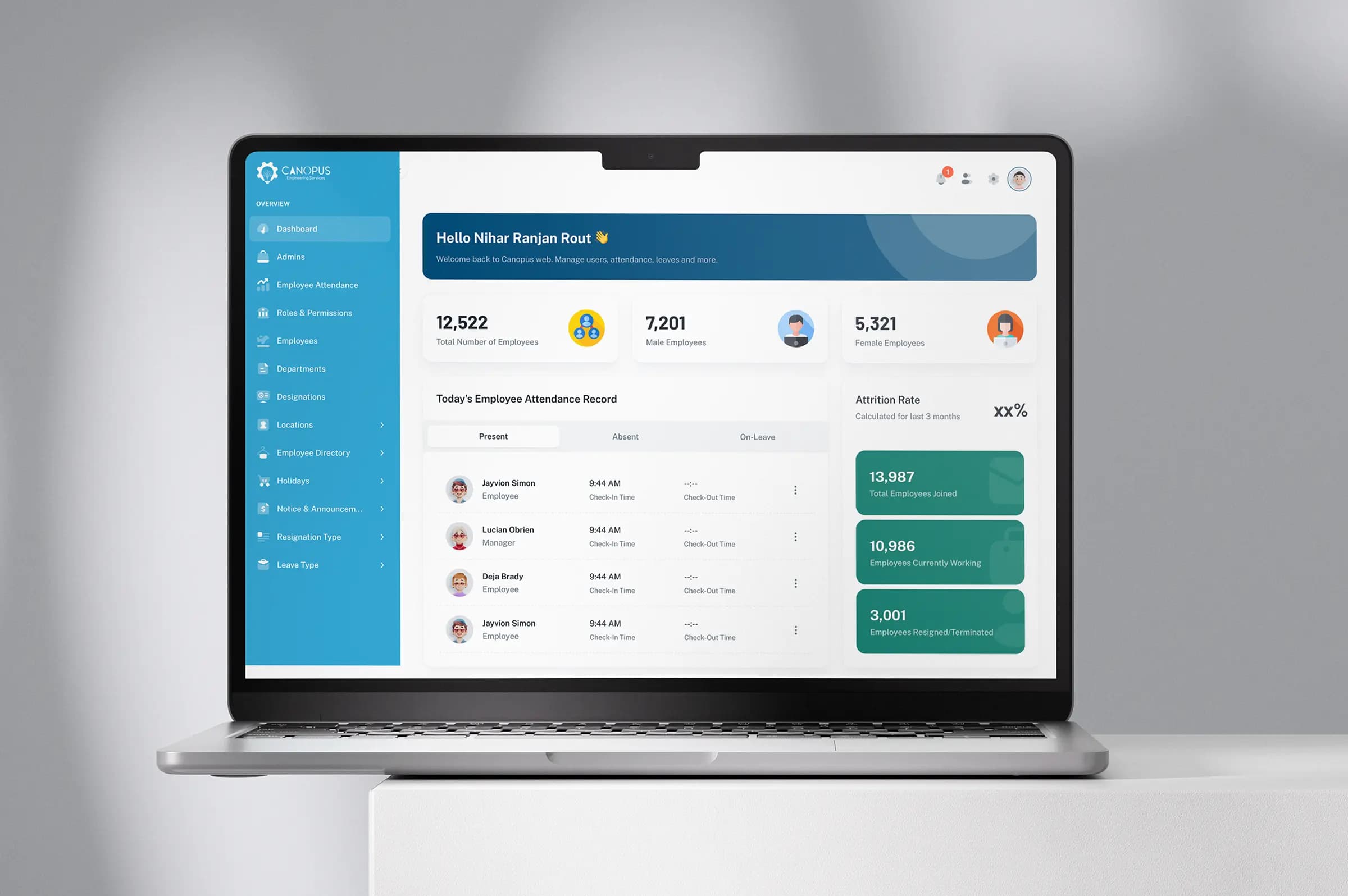
Custom Cloud ERP for Large-Scale Industrial Operations
/01 · Enterprise ERP

Custom Cloud ERP for Large-Scale Industrial Operations

A fully custom, browser-based ERP system built to unify every department, eliminate silos, and scale with the business — designed and delivered by Creuto end to end.

4

Departments Unified

1

Source of Truth

100%

Browser-Based Access

View Case Study
Enterprise Workflow Automation & Process Management Platform
/02 · Operations / Workflow

Enterprise Workflow Automation & Process Management Platform

A full-stack workflow management platform — admin panel, task boards, collaboration engine, and reporting suite — designed and delivered by Creuto from the ground up.

1

Source of Truth for All Work

100%

Task Audit Trail

4

Task Lifecycle States

View Case Study
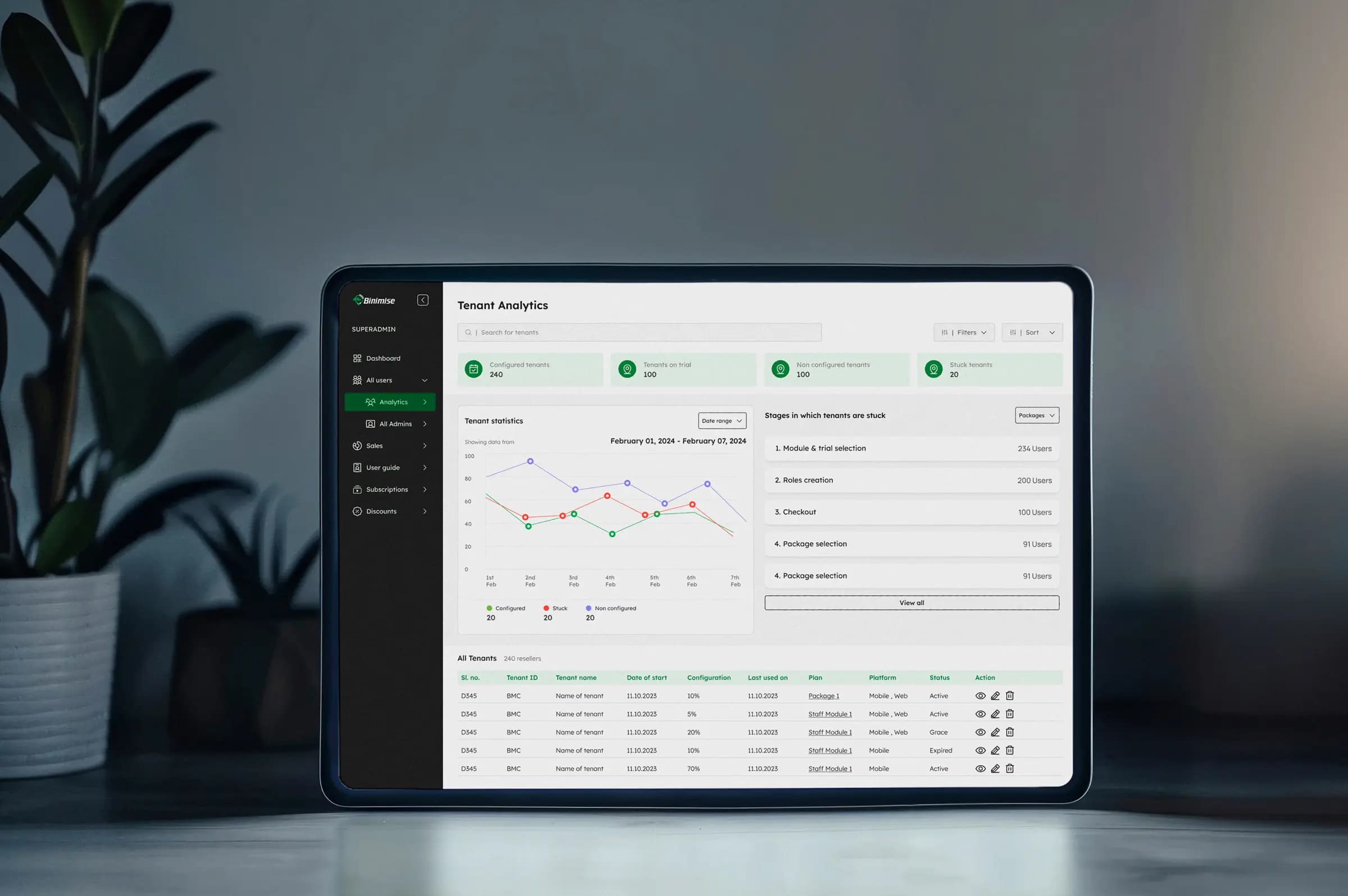
IoT Smart City Platform for Binimise
/03 · Smart City / IoT

IoT Smart City Platform for Binimise

A cloud-native, IoT-powered smart city platform — web command dashboard, citizen mobile app, field staff app, and full IoT integration designed and delivered by Creuto from the ground up.

10

Integrated Modules

25–30%

Reduction in Vehicle Trips

4

Platforms Delivered

View Case Study
COMPLIANCE AND SECURITY

Compliance and security, designed in.

The manufacturing standards we build against and the controls behind them. Your compliance team keeps ownership; we make the software easy to certify.

Manufacturing standards and regulations we build for

  • ISO 9001 quality management records
  • IEC 62443 industrial cybersecurity
  • ISO/IEC 27001 aligned controls
  • ISO 50001 energy management support
  • FDA 21 CFR Part 11 for regulated production
  • GDPR for employee and customer data (EU and UK)
  • IATF 16949 support for automotive suppliers

Industrial standards and protocols

  • ISA-95 enterprise and control integration
  • ISA-88 batch control models
  • OPC UA
  • MQTT and Sparkplug B
  • Modbus TCP and RTU
  • MTConnect for machine tools

Security controls

  • OT and IT network segregation
  • Encryption in transit and at rest
  • Role and plant-based access control
  • Immutable audit trails
  • Secure remote access for vendors
  • Penetration testing before go-live

Platform quality

  • GHG Protocol aligned energy and emissions data
  • Data lineage from machine to report
  • High availability for shop-floor services
  • Offline buffering at the edge
  • Validation and test evidence for regulated lines
INTEGRATIONS

Manufacturing integrations we connect.

The platforms, standards and third-party services a product in this sector usually has to talk to. If yours is not listed, it is almost certainly something we have connected before.

/01Machines and control

  • Siemens S7 and TIA Portal PLCs
  • Rockwell Allen-Bradley PLCs
  • Fanuc and Haas CNC controllers
  • Ignition SCADA
  • Kepware KEPServerEX
  • AVEVA PI System

/02ERP and business systems

  • SAP S/4HANA
  • Oracle NetSuite and Fusion
  • Microsoft Dynamics 365
  • Epicor
  • Odoo
  • Salesforce

/03IoT and edge

  • AWS IoT SiteWise
  • Azure IoT Hub
  • Siemens Industrial Edge
  • MQTT brokers
  • Vibration and energy sensors
  • Barcode and RFID readers

/04Engineering and quality

  • PLM systems such as Siemens Teamcenter
  • CAD and BOM exports
  • Coordinate measuring machines
  • Machine vision cameras
  • Label printers such as Zebra
  • Microsoft Power BI
WHY CREUTO

Why choose Creuto as your manufacturing software development company

The reasons clients in this sector give when they recommend us, not the ones we would pick ourselves.

Either we build it exceptional, or we don't.

The standard every manufacturing product leaves our studio with.

0+

Products delivered

0+

Years of engineering

0%

Client satisfaction

Start a conversation
  1. /01

    We start on the shop floor

    Requirements come from operators and supervisors, not just a specification document, so the software matches how the plant really runs.

  2. /02

    We speak PLC and ERP

    Our engineers connect machines and business systems, so integration is not handed off to a third party halfway through.

  3. /03

    Built for brownfield plants

    We work with mixed-age machine fleets and existing systems rather than assuming a greenfield factory.

  4. /04

    Measured outcomes

    We baseline OEE, scrap and downtime before we build, so improvements are visible and attributable.

  5. /05

    A long-term engineering partner

    Support, monitoring and continuous improvement keep the platform current as products, lines and plants change.

BENEFITS

Benefits of custom manufacturing software over off-the-shelf tools.

What organisations in this sector gain when the software is built around their workflows rather than the other way around.

  1. 01

    Higher OEE

    Real downtime reasons and live machine states show exactly where capacity is lost and what to fix first.

  2. 02

    Less scrap and rework

    In-process checks and SPC catch drift early, before a whole batch is affected.

  3. 03

    Fewer breakdowns

    Condition-based maintenance targets the machines most likely to fail and reduces emergency repairs.

  4. 04

    Faster recalls and audits

    Lot and serial genealogy finds affected products in minutes rather than days.

  5. 05

    Accurate planning and costing

    ERP receives actual production, scrap and labour, so schedules and product costs reflect reality.

  6. 06

    Lower energy per unit

    Energy metering by line and product highlights waste and supports ISO 50001 targets.

HOW WE WORK

Our manufacturing software development process.

Transparent, sprint-based and built around decisions you can see. You know what ships, when, and why at every step.

Start Your Project
  1. 01

    Gemba discovery

    We walk the floor with operators, supervisors, quality and maintenance, map how work and data actually flow, and agree the OEE, quality or lead time outcomes to improve.

  2. 02

    Architecture and integration plan

    ISA-95 boundaries, machine connectivity, edge versus cloud, ERP touchpoints and IEC 62443 security are documented before design starts.

  3. 03

    Design and operator validation

    Screens are tested at the workstation with real operators, gloves, noise and shift pressure, so data entry takes seconds rather than minutes.

  4. 04

    Agile engineering

    Two-week sprints reviewed by your production leads, with machine connections built early on a pilot line or simulator.

  5. 05

    Integration, QA and hardening

    End-to-end tests from PLC to ERP, load tests at peak production rates, edge failover checks and a penetration test before go-live.

  6. 06

    Pilot line, then scale

    We prove value on one line, train operators, then roll out cell by cell and plant by plant with a roadmap driven by measured results.

TECHNOLOGY STACK

Technology stack for manufacturing software development.

Chosen per project for longevity, hiring depth and fit with your existing systems, never by fashion.

/01Mobile and shop-floor devices

  • Kotlin
  • Jetpack Compose
  • Swift
  • Flutter
  • React Native

/02Web and backend

  • React
  • Next.js
  • TypeScript
  • Node.js
  • NestJS
  • Python
  • FastAPI
  • .NET
  • Java

/03IoT and industrial data

  • OPC UA
  • MQTT
  • Modbus
  • Ignition
  • Kafka
  • AWS IoT SiteWise
  • Azure IoT Hub

/04Data

  • PostgreSQL
  • TimescaleDB
  • ClickHouse
  • Redis
  • Snowflake
  • BigQuery

/05Cloud and DevOps

  • AWS
  • Azure
  • Google Cloud
  • Docker
  • Kubernetes
  • Terraform
  • GitHub Actions

/06AI and analytics

  • PyTorch
  • TensorFlow
  • Scikit-learn
  • OpenCV
  • Claude
  • OpenAI
  • Grafana

/07Security and identity

  • OAuth 2.0
  • OpenID Connect
  • SAML
  • Keycloak
  • Azure Entra ID
  • Vault

AI IN MANUFACTURING

AI that finds lost capacity on every line.

We apply AI on the shop floor where it pays back quickly: predicting failures, spotting defects, improving schedules and helping operators find answers, with engineers and supervisors approving every change to production.

Explore our AI engineering
  • Predictive maintenance from vibration and current data
  • Vision-based defect detection
  • Schedule optimisation and what-if planning
  • Root cause analysis for downtime and scrap
  • Operator assistants for work instructions and SOPs
  • Demand and material forecasting
TRENDS

Trends shaping manufacturing software right now.

The shifts we design for so a product launched this year is still the right product in three.

  1. 01

    Composable MES

    Manufacturers are replacing monolithic MES with modular applications on a shared data layer, often built on Ignition or a unified namespace.

  2. 02

    Unified namespace and MQTT

    MQTT with Sparkplug B is becoming a common way to publish plant data once and consume it across MES, analytics and ERP.

  3. 03

    AI on the line

    Vision inspection, predictive maintenance and AI assistants for work instructions are moving from pilots into daily production.

  4. 04

    OT cybersecurity requirements

    IEC 62443 and the EU Cyber Resilience Act are raising the security bar for connected machines and plant software.

  5. 05

    Carbon accounting at product level

    Customers increasingly ask for product carbon footprints, which depends on energy and material data captured at line level.

  6. 06

    Reshoring and supply resilience

    New and expanded plants in India, the Gulf and the US are being designed digital from day one, with software selected alongside equipment.

COST AND TIMELINE

How much does manufacturing software development cost?

There is no honest single number. Scope, integrations and compliance drive the budget, so we price against a written scope after discovery. The factors below are what move it.

  1. 01

    Number of machines and lines

    Each machine type needs connectivity, tag mapping and testing, and older machines may need retrofit hardware.

  2. 02

    Modules in scope

    OEE alone is a smaller build than OEE, quality, maintenance, scheduling and traceability on one platform.

  3. 03

    ERP and system integrations

    Each ERP, PLM, WMS or quality system adds mapping, test environment access and validation work.

  4. 04

    Regulated production

    Electronic records and signatures, validation documentation and audit trails add effort for pharma and food plants.

  5. 05

    Edge and on-premise deployment

    Plants with limited internet need edge servers, local failover and update processes.

  6. 06

    Analytics and AI

    Predictive and vision models need data collection, labelling, evaluation and monitoring.

EngagementTypical scopeTimeline
Pilot line MVPOne line or work centre, machine connectivity, OEE and downtime tracking, one ERP touchpoint.10 to 14 weeks
Production platformPlant-wide MES modules, quality and maintenance, ERP integration, operator and supervisor apps.4 to 7 months
Enterprise or multi-plantMultiple plants and machine types, shared data platform, analytics, AI and phased rollout.8 to 14 months, phased
BUSINESS MODELS

How manufacturing products make money.

Revenue models we have built billing, reporting and growth loops for. Most products combine two or three.

  1. 01

    Per-plant or per-line SaaS

    Subscription pricing per plant, line or connected machine for MES and OEE products.

  2. 02

    Enterprise licences

    Annual licences and implementation fees for multi-plant manufacturers and industrial groups.

  3. 03

    Machine builder services

    OEMs sell connected monitoring, remote support and spare parts subscriptions alongside their equipment.

  4. 04

    Outcome-based contracts

    Fees linked to uptime, OEE or energy savings, common in maintenance and energy services.

  5. 05

    Marketplace and add-ons

    Paid modules, connectors and analytics packs sold on top of a core manufacturing platform.

HOW WE DELIVER

Services behind our manufacturing work

The engineering disciplines every project in this sector draws on. Each has its own page with process, stack and FAQs.

TESTIMONIALS

Don't take our word for it.

Founders and product leaders on what it is like to build with Creuto.

“Their ability to adapt to our needs while keeping things on track made the experience seamless.”

Creuto delivered a scalable system that improved payroll efficiency and transparency and reduced human errors. The team adhered to timelines, quickly responded to changes, adapted to needs, and managed the project professionally. Their ability to understand the client's requirements was impressive.

RM

Radhika Mohanty

Finance Manager, Crect

Read on Clutch

More client voices

/01 of 06

on Clutch
FAQ

Frequently Asked Questions

Straight answers about manufacturing software projects. If yours is not here, ask us directly.

Ask our manufacturing team

Cost depends on the number of machines and lines to connect, the modules in scope such as OEE, quality, maintenance and scheduling, the ERP and other systems to integrate, and whether you run regulated production that needs validation. A pilot line MVP is a much smaller investment than a multi-plant MES. After a short discovery we provide a fixed-scope proposal with a clear breakdown.

A pilot line MVP typically takes 10 to 14 weeks. A plant-wide production platform with MES modules, quality, maintenance and ERP integration usually takes four to seven months. Multi-plant programmes are delivered in phases over eight to fourteen months, line by line, so production is never interrupted.

We design system boundaries using ISA-95, secure connected plant networks to IEC 62443, and support ISO 9001 quality records, ISO 27001 controls and ISO 50001 energy reporting. For pharmaceutical or food plants we add electronic records and signatures aligned with FDA 21 CFR Part 11.

Yes. We connect PLCs, CNCs and sensors over OPC UA, Modbus, MQTT and MTConnect, often through Ignition, Kepware or Siemens Industrial Edge, and exchange orders, materials and production data with SAP, Oracle, Microsoft Dynamics, Epicor or Odoo. Older machines can be retrofitted with sensors and gateways.

App development usually means the operator, supervisor or mobile apps people use on the floor. Manufacturing software development covers the whole system: those apps plus machine connectivity, data pipelines, ERP integration, analytics and security. We deliver both as one connected product.

Both. We build custom MES modules where off-the-shelf products do not fit your process, and we extend or integrate existing MES and ERP platforms where they already work. The decision comes from discovery, not from a preferred product.

Yes. We calculate availability, performance and quality from real machine signals and production counts, with operator-entered downtime reasons and agreed rules for planned stops, so OEE figures are consistent across lines, shifts and plants.

Yes. We assess the current system, migrate data with validation, and replace functionality in phases, often starting with one line, so production continues while the new platform takes over.

LET'S BUILD

Planning a manufacturing product? Let's scope it together.

Tell us what you are building. We will help you scope it, design it, and ship it, with a senior team accountable end to end.

  • Reply within one business day
  • NDA on request
  • Senior engineers only
  • Fixed scope, no surprises