Why Every Business Owner Should Invest in Custom Software?
Why business owners invest in custom software: it saves time, fits your process and grows with you. When it is not the answer, and how to start.
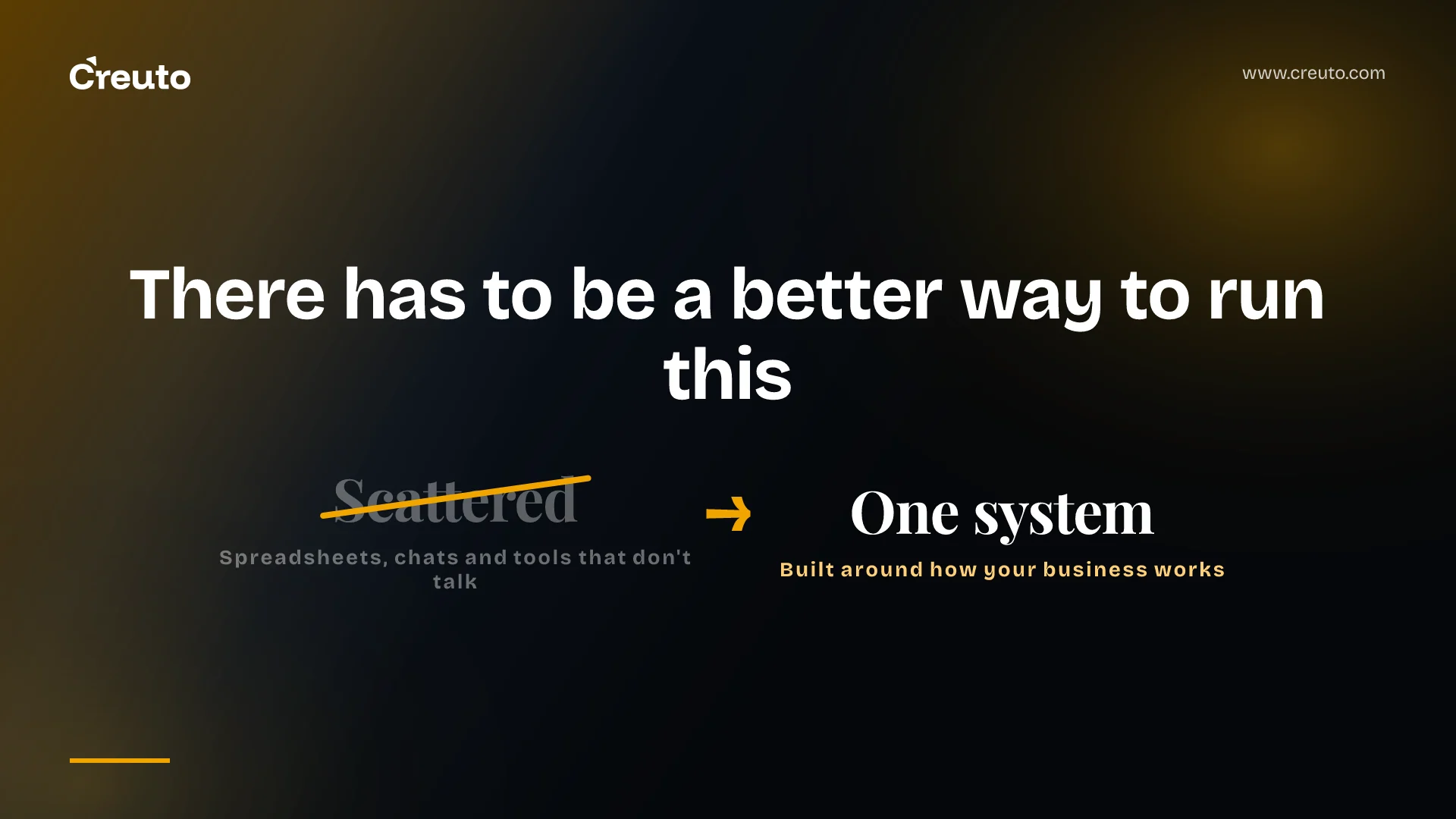
If you have ever thought "there has to be a better way to run this business", you are not alone. Many owners spend their days juggling spreadsheets, chasing updates across WhatsApp groups and paying for apps that never quite fit. That is where custom software for business owners comes in: software built around how your business actually works, rather than the other way round.
Not every business needs it, and we will say where it does not. But for many growing companies it is one of the best investments they make.
What is custom software?
Custom software is built for one business's processes, data and goals. Instead of stitching together several apps that do not talk to each other, it brings the work into one place — orders, customers, stock, staff, reports — with automation where it saves time. Think of it as a tailored suit rather than one off the rack.
Why custom software is worth the investment
1. It saves time and reduces errors
Tasks that take hours by hand can happen automatically. A manufacturer can track orders from enquiry to dispatch in one system. A retailer can manage stock and billing together. Less copying between spreadsheets means fewer mistakes.
2. It fits your business
Ready-made tools make you adapt your process to them. Custom software adapts to you: your approval rules, your pricing, your reports.
3. It makes your team more productive
When people are not switching between apps and re-entering data, they spend more time with customers and on work that grows the business.
4. It grows with you
New branches, products or services can be added to the system as the business changes, without licence fees rising with every new user.
5. It gives you an edge
If your way of serving customers is better than your competitors', software built around it makes that advantage faster and harder to copy.
An illustration
Imagine a mid-sized logistics company that tracks deliveries through phone calls and spreadsheets. A custom system could give drivers a simple mobile app to update each delivery, give the office a live view of routes and delays, and notify customers automatically. The benefits — fewer calls, faster answers, fewer disputes — come from matching the software to the real workflow. The size of the benefit depends on the business, which is why it is worth measuring before and after.
Is it only for big companies?
No. Small and mid-sized businesses often gain the most, because a small team feels every hour of manual work. The key is to start with the process that costs you most and build only what that needs.
When custom software is not the answer
For standard functions — accounting, email, basic HR — good off-the-shelf products are usually cheaper and better. Custom software earns its cost on the processes that are specific to your business. We cover this balance in custom vs off-the-shelf software.
How to get started
- List daily pain points — the tasks that waste time or cause errors.
- Pick the most costly one as the starting point.
- Talk to a development partner who asks about your business before your features; see how to choose the right custom software development company.
- Start small — build the essential features first, then expand.
- Measure the result against how things worked before.
For a closer look at returns, see what ROI to expect from custom software. Our custom software development team helps business owners find the right starting point and build software that fits.
Frequently asked questions
Custom software is software designed and built for one business's processes, data and goals. It brings work such as orders, customers, stock and reporting into one system, with automation where it saves time, rather than relying on several disconnected apps.
Custom software can be very worthwhile for small businesses because small teams feel the cost of manual work most. It pays off when built around the most costly process first, with only the features that process needs.
A business should not build custom software for standard functions such as accounting, email or basic HR, where good off-the-shelf products are cheaper and better. Custom software is best for processes specific to the business.
Start by listing daily pain points, choosing the most costly one, finding a development partner who asks about your business first, building the essential features, and measuring results against how the process worked before.