Digital Transformation Strategy: A Strategic Framework for Modern Enterprises
A digital transformation strategy framework for enterprises: strategy before technology, intelligent legacy modernisation, data as an asset, and people.
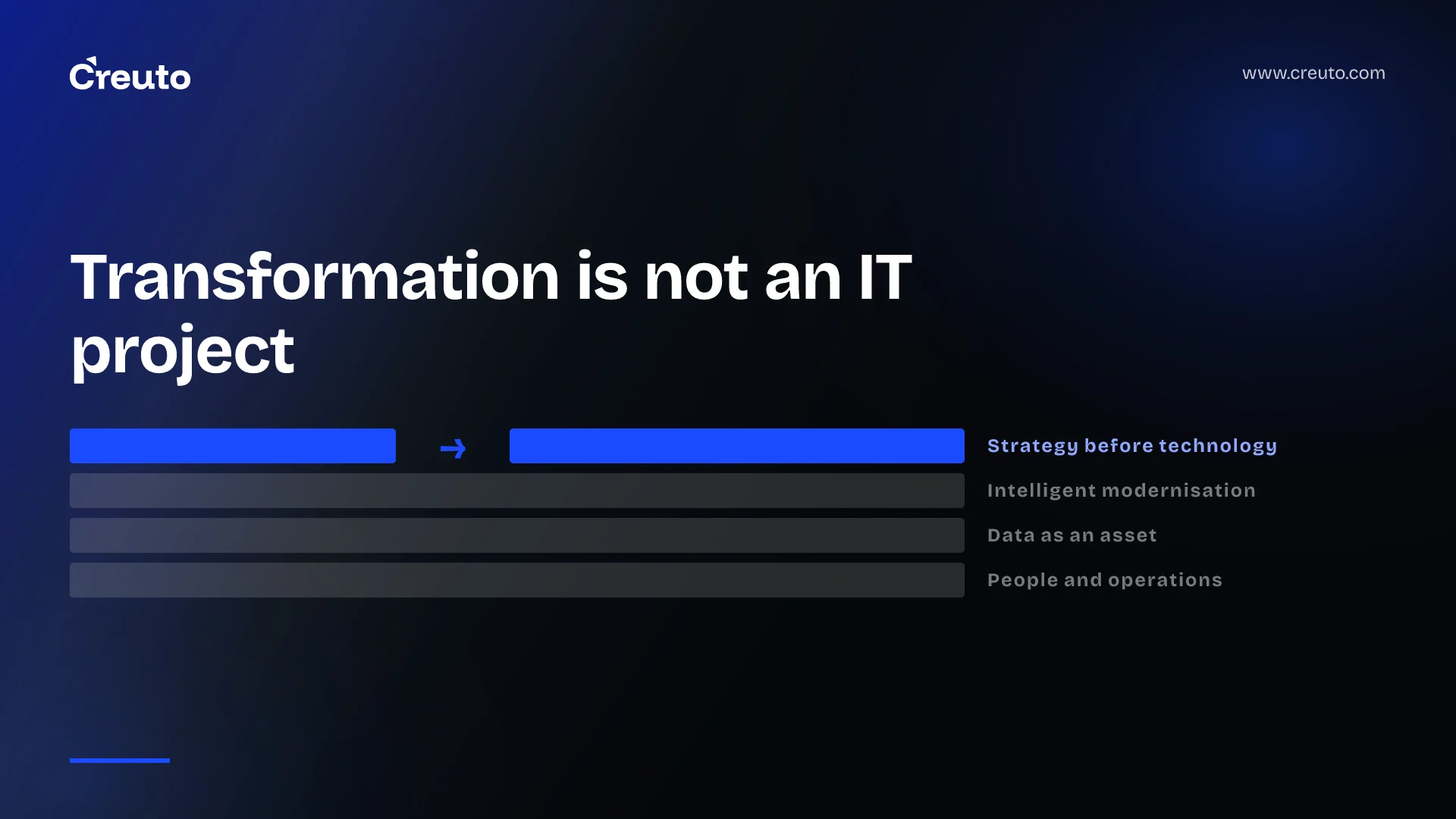
Digital transformation is not a technology upgrade. It is a change in how a business creates and delivers value, enabled by technology. That is why so many programmes disappoint: they are run as IT projects — new systems installed, old processes unchanged. A digital transformation strategy that works aligns business goals, architecture, data and people. This framework organises it around four pillars.
Pillar 1: Strategy before technology
Many organisations start by choosing tools — a cloud platform, a new ERP, an automation suite — before defining the outcomes they want. The result is fragmented initiatives and unclear return. Start with questions:
- Which operational inefficiencies are limiting growth?
- Where does the customer experience fall short?
- Which new revenue streams could digital capabilities open?
- What will we measure to know it worked?
When business strategy leads and technology follows, each initiative has a purpose and a metric. Our list of ten signs you need a digital transformation is a useful starting diagnostic.
Pillar 2: Modernise legacy systems intelligently
Legacy systems are often the biggest barrier to agility, but replacing everything at once is rarely practical. Modernise progressively — APIs around legacy cores, modules replaced one at a time, cloud migration where it pays — as set out in how to modernise legacy systems without breaking your business. The goal is an architecture of connected systems, not new silos.
Pillar 3: Treat data as an asset
Transformation becomes powerful when decisions are based on reliable, timely data. That requires consistent data definitions, integration between systems, analytics people actually use, and governance over who can access what. It is also the foundation for any serious use of AI; see building AI-ready software. Without a data strategy, transformation stays on the surface.
Pillar 4: Enable people and operations
Technology does not transform organisations; people do. Resistance to change, skill gaps and unclear leadership priorities undermine good plans. Invest in:
- leadership alignment on goals and trade-offs;
- training and upskilling;
- cross-functional teams that own outcomes end to end;
- clear communication of why changes are happening.
Sequencing: where to start
Pick one or two initiatives with visible value and manageable risk — a customer-facing process with obvious friction, or an internal workflow with heavy manual effort. Deliver them well, measure the result, and use that credibility to fund the next phase. Large programmes that try to change everything at once rarely survive their first budget review.
Measuring transformation success
Define KPIs per initiative: cycle times, cost per transaction, customer satisfaction, error rates, time to release, revenue from new channels. Review them regularly and be willing to stop initiatives that do not deliver. Be sceptical of industry-wide success or failure percentages quoted without a source; many do not survive checking, as we found with the ERP failure rate.
The bigger perspective
Digital transformation is an ongoing capability, not a one-off project. Organisations that succeed align strategy, architecture, data and culture, then keep adjusting as markets and technology change. Our enterprise application development team helps organisations turn transformation goals into a phased roadmap and delivered systems.
Frequently asked questions
A digital transformation strategy is a plan for changing how a business creates and delivers value using technology. It starts from business outcomes, then aligns systems, data, processes and people, with measurable goals for each initiative.
Digital transformation projects often fail because they are run as technology projects without clear business outcomes, try to change everything at once, ignore data quality, or underinvest in training and change management for the people who must use the new systems.
Start with one or two initiatives that have visible value and manageable risk, such as a customer process with obvious friction or a manual internal workflow. Deliver and measure them, then use the results to fund and shape the next phase.
Measure digital transformation with KPIs for each initiative, such as cycle time, cost per transaction, customer satisfaction, error rates, release frequency and revenue from new channels, reviewed regularly against a baseline.